
My uncle almost lost 80 lakh rupees last year. He found a beautiful plot in Bahria Town Lahore. Good location. Reasonable price. The seller showed all the papers. Everything looked perfect.
My uncle was about to transfer the money when my cousin, who works in real estate, said: “Have you verified property ownership in Pakistan through official channels?” My uncle hadn’t. He thought the papers were enough.
My cousin insisted they verify property ownership in Pakistan properly before paying anything. Good thing he did. Turns out the seller was a fraud. The plot belonged to someone else. The documents were fake. That one verification saved my uncle’s life savings.
This is why I’m writing this. Too many people buy property in Pakistan without proper verification. They trust sellers. They trust agents. They don’t verify property ownership in Pakistan themselves. Then they lose everything.
Let me show you exactly how to verify property ownership in Pakistan in 2026, step by step, so you never make this mistake.
Why People Don’t Verify Property Ownership in Pakistan
Before we get into how to verify property ownership in Pakistan, let me tell you why most people skip this step. My friend bought a plot three years ago. I asked him: “Did you verify ownership?”
He said: “The agent showed me all the papers. Registry, Fard, everything. Why would I waste time?” Two years later, someone else claimed that plot. Turned out the registry was forged. Real owner appeared with actual documents. Court case is still going on.
Here’s the thing. People don’t verify property ownership in Pakistan because: They think documents are enough. Documents can be faked. Really easily. They trust the agent or seller. Big mistake. Even “reputable” agents have been involved in frauds.
They’re in a hurry. Plot is good, price is right, someone else might buy it. So they rush.They don’t know how. This is the biggest reason. People simply don’t know how to verify property ownership in Pakistan properly.
Let me fix that last problem right now.
The Online Revolution: Punjab Makes It Easy

In 2026, we’re lucky. Punjab government has made it super easy to verify property ownership in Pakistan, at least in Punjab.
The Punjab Land Records Authority (PLRA) launched an online system. You can now sit at home, open your phone or laptop, and verify property ownership in Pakistan within minutes.
This wasn’t possible ten years ago. You had to visit revenue offices. Stand in long queues. Deal with corrupt patwaris. Pay bribes. Wait for days. Now? Few clicks. Few minutes. Free or very cheap.
Let me show you how to verify property ownership in Pakistan through PLRA’s online system.
Step 1: Get the Basic Property Information
Before you can verify property ownership in Pakistan online, you need specific information about the property.
Ask the seller for these details. Write them down carefully:
District name (like Lahore, Faisalabad, Rawalpindi) Tehsil name (sub district, like Model Town, Saddar) Mauza name (village or area name) Khewat number (owner identification number) Khatooni number (cultivator number) Khasra number (plot or field number)
Don’t worry if this sounds confusing. These are just official terms for identifying land in Pakistan’s system.
Think of it like an address, but more detailed. Your regular address might be “House 25, Street 3, DHA Isalamabad” Land records need Mauza, Khewat, Khatooni, Khasra to identify the exact piece of land.
The seller should have all this information. If they don’t, that’s already a red flag.
My neighbor was buying agricultural land. Seller couldn’t provide Khasra number. Just kept making excuses. My neighbor walked away. Later found out that land had ownership disputes. The seller couldn’t give proper numbers because records were unclear.
So first step to verify property ownership in Pakistan: get complete land identification details from the seller.
Step 2: Check PLRA Website for Punjab Properties
If the property is in Punjab (which covers most of Pakistan’s population and prime real estate), you’ll use PLRA’s website. Go to punjab zameen.gov.pk (official PLRA website).
You’ll see several options on the homepage. For property verification, you want “Property Registration” or “Get Online Fard.” Let me explain both ways to verify property ownership in Pakistan through PLRA.
Method 1: Property Registration Search
Click on “Property Registration” on the PLRA homepage.You’ll land on a page called ROD (Record of Deeds). This shows all registered properties.
Enter the following information:
Registry number (if you have it) Or seller’s CNIC number Or buyer’s name Select the district and tehsil Click search.
The system will show you the registered deed. You can see: Who registered the property When it was registered Property details Original scanned registry document
You can download the actual registry. It’s the real, official document stored in government records. This is one of the most reliable ways to verify property ownership in Pakistan because you’re seeing the actual government registry, not just a copy the seller gave you.
My friend used this method when buying a house in Lahore. The seller showed a registry from 2020. But when my friend checked online, the latest registry showed a different owner from 2023. Seller was trying to use an old, outdated registry.
Verification saved my friend from a major fraud.
Method 2: Get Online Fard
Fard is a document that shows current land ownership. It’s like a certificate saying who owns this land right now.
To get Fard and verify property ownership in Pakistan:
Go to punjab-zameen.gov.pk Click “Get Online Fard” You’ll need to register or login (using your CNIC) Enter land details: District, Tehsil, Mauza, Khewat, Khatooni, Khasra Pay a small fee (usually 50-100 rupees) Download the Fard
This Fard will show:
Current owner’s name Father’s name Total land area Whether there are multiple owners Any recent transfers or mutations Match this information with what the seller told you. Does the name match? Does the land size match? Everything should be exactly the same.
If seller said “I’m the owner, name is Muhammad Ahmed” but Fard shows owner as “Ali Raza,” you have a problem. Don’t buy. Simple as that. This is how you verify property ownership in Pakistan officially through government records.
Step 3: Verify the Fard Authenticity
Here’s something many people miss when they verify property ownership in Pakistan: checking if the Fard itself is real. Yes, people fake Fards too. They create documents that look official but aren’t.
PLRA thought of this. Every official Fard has: A unique QR code A verification number
To verify the Fard is authentic:
Look at the bottom of the Fard document Find the QR code Scan it with your phone camera Or go to PLRA website and enter the verification number manually
The system will tell you if this Fard is genuine or fake. I saw a case where someone bought land in Kasur. Seller showed a very official-looking Fard. Printed on proper paper, had stamps, looked 100% real.
Buyer scanned the QR code. System said: “No record found.” The Fard was fake. Saved the buyer lakhs of rupees. So when you verify property ownership in Pakistan, don’t just get the Fard. Verify the Fard itself is genuine.
Step 4: Check for Physical Visit (If Possible)
While online systems help verify property ownership in Pakistan remotely, nothing beats a physical visit. Visit the nearest Arazi Record Center (ARC) or e-Khidmat Markaz in that district.
Take your CNIC and the property details. Ask the officials to show you the record in their system.
They’ll check the database and show you the official ownership record on their screen. You can verify right there, in person, with government officials.
This is especially important for:
Large purchases (house, big plot, agricultural land) If you found any discrepancy online If you don’t fully trust the online information If you’re overseas Pakistani buying property
My cousin lives in Dubai. He wanted to buy a house in Gujranwala. He checked everything online. But before final payment, he asked his brother in Pakistan to visit the local ARC.
His brother went to the office, showed property details, asked them to verify. Officials checked and confirmed ownership was clear and correct.
Only after that physical verification did my cousin transfer the money. Smart approach to verify property ownership in Pakistan for expensive purchases.
What About Sindh Province?
I’ve mostly talked about Punjab because that’s where PLRA operates. But what if you’re buying property in Karachi, Hyderabad, or anywhere in Sindh?
Sindh has its own system to verify property ownership in Pakistan. The Sindh Board of Revenue runs sindhzameen.gos.pk website. Here’s how to verify property ownership in Pakistan for Sindh properties:
Go to sindhzameen.gos.pk Click on “Search Records” You can search by:
Owner name CNIC number Survey number Village name Enter the details and search You’ll get Form 7-A (ownership record) and Form 7-B (transfer record)
The system isn’t as advanced as Punjab’s yet, but it still helps verify property ownership in Pakistan for Sindh properties.
For more detailed verification in Sindh, you’ll need to visit your local Mukhtiarkar (revenue) office with property details and CNIC. They’ll check official registers and provide authenticated Fard.
My friend bought property in Hyderabad last year. He first checked online through Sindh Zameen. Then he visited the local revenue office with his agent. Officials confirmed ownership was clear.
This two-step process to verify property ownership in Pakistan in Sindh is currently the safest approach.
What About KPK and Balochistan?
Here’s the honest truth: KPK and Balochistan don’t have fully digital systems to verify property ownership in Pakistan yet.
For KPK and Balochistan properties, you must:
Visit the local Tehsil office Bring property details and your CNIC Request to see the official land record register Ask for authenticated Fard
This is more traditional and time consuming. But it’s the only reliable way to verify property ownership in Pakistan in these provinces currently.
My friend bought land in Abbottabad, KPK. He had to physically go to the Tehsil revenue office, wait in line, meet with officials, and get them to check their records book (yes, still paper-based in some areas).
It took him a full day, but he got official confirmation of ownership. If you’re buying in KPK or Balochistan, factor in this time and effort to verify property ownership in Pakistan properly.
Red Flags You Should Never Ignore
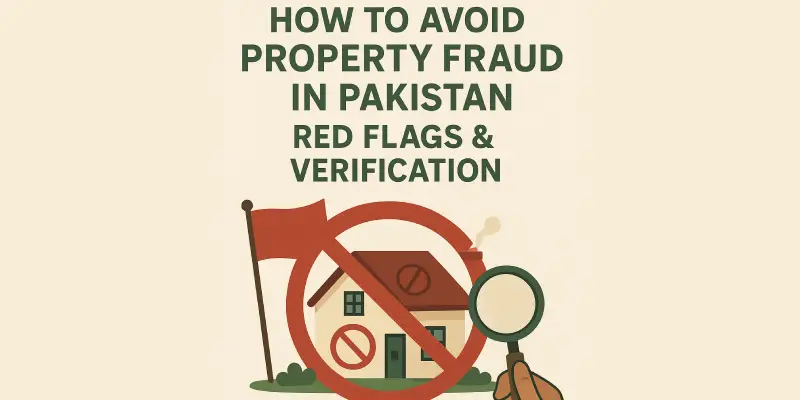
While learning how to verify property ownership in Pakistan, also learn what warning signs to watch for. If you see any of these, stop immediately:
Seller refuses to provide complete land details (Khewat, Khatooni, Khasra numbers). Legitimate sellers have this information readily available. Documents don’t match online records. Names are different, land size is different, anything is different. Don’t trust the seller’s explanation. Walk away.
Seller rushes you. “Buy today or someone else will buy tomorrow.” This is always a scam tactic. Legitimate deals don’t need artificial urgency. Price is way below market. If it’s too good to be true, it definitely is. Nobody sells prime property for 30% below market price without a serious problem.
Multiple people claim ownership. If you check and find the property has ownership disputes, court cases, or multiple claimants, don’t touch it. Registry can’t be verified online. Every legitimate Punjab property registry should be verifiable through PLRA. If it’s not there, something’s wrong.
My uncle’s friend bought a plot in Multan. Seller said “online system hasn’t updated yet, that’s why it’s not showing.” Uncle’s friend believed it. Paid full amount. Turns out there was no online record because the plot didn’t exist. The entire society was illegal and unapproved.
He lost everything. When you verify property ownership in Pakistan and something feels off, trust that feeling. Don’t let sellers or agents pressure you into ignoring red flags.
The CNIC Match Is Critical
One specific thing to always check when you verify property ownership in Pakistan: CNIC match. The owner’s name in official records should match their actual CNIC.
Get the seller’s CNIC card. Check the name carefully. Then check the official Fard or registry. Names must match exactly. Not similar. Not close. Exactly.
I’ve seen people lose money because the registry showed “Muhammad Ahmed” but seller’s CNIC said “Muhammad Ahmad” (Ahmed vs Ahmad, one letter difference).
Seller said “it’s just a spelling variation, same person.” It wasn’t. Different people. The Ahmad on CNIC wasn’t the Ahmed on registry. Banks and courts don’t accept spelling variations. If names don’t match exactly, ownership is questionable.
When you verify property ownership in Pakistan, this CNIC match is often the final confirmation that seller is truly the owner.
What If You Find a Problem?
You verified property ownership in Pakistan and found an issue. Maybe names don’t match. Maybe there’s a dispute mentioned. Maybe ownership is unclear. What do you do?
Simple answer: Don’t buy. I don’t care how good the price is. I don’t care what excuses the seller gives. If ownership verification shows any problem at all, walk away.
My neighbor found his dream house. Perfect location. Good price. But when he tried to verify property ownership in Pakistan through PLRA, he found a “mutation pending” status.
Seller said: “Oh that’s minor, it’ll clear up soon, let’s proceed anyway.”
My neighbor wanted to believe him. But he asked a lawyer friend. Lawyer said: “Mutation pending means ownership transfer isn’t complete. Until mutation is done, ownership legally isn’t transferred. Don’t buy.”
My neighbor walked away. Six months later, he heard that house is stuck in a legal dispute. The pending mutation was because previous owner’s family was contesting the sale.
He saved himself from years of court battles. When you verify property ownership in Pakistan and find problems, there’s only one smart move: don’t buy that property.
For Overseas Pakistanis
Special mention for overseas Pakistanis trying to verify property ownership in Pakistan from abroad. You can do most verification online now:
Use PLRA website for Punjab properties Use Sindh Zameen for Sindh properties Download official Fards and registries Verify documents through QR codes But I still strongly recommend:
Have a trusted person in Pakistan do a physical verification at ARC If possible, visit Pakistan yourself before final payment Use a reputable lawyer in Pakistan to handle documentation Never transfer full payment without verification
My friend in Canada wanted to buy a house in Lahore. He did everything online. Checked PLRA. Downloaded Fard. Everything looked good. But before transferring money, he asked his brother in Lahore to visit PLRA office in person. His brother went, verified everything physically with officials.
Only after his brother confirmed everything was legitimate did my friend send the money. That’s the smart way to verify property ownership in Pakistan when you’re living abroad.
Conclusion
After everything I’ve told you about how to verify property ownership in Pakistan, let me give you one final piece of advice. This advice is worth more than everything else combined: Hire a lawyer.
Yes, you can do all the verification yourself. Yes, online systems make it easier. Yes, you can save lawyer fees. But for any property purchase over 30-40 lakh rupees, hire a property lawyer to help verify property ownership in Pakistan.
They know what to look for. They know the loopholes. They know the scams. They can spot fake documents you might miss. A good lawyer costs 50,000-100,000 rupees for a property deal. Sounds expensive, right?
Not when you compare it to losing 80 lakh rupees like my uncle almost did. I’ve helped four family members and friends buy property. Each time, even after I helped them verify property ownership in Pakistan online, I insisted they hire a lawyer for final verification.
Every single time, the lawyer found something we missed. Not always major. Sometimes just paperwork issues. But in one case, the lawyer caught a serious problem with property boundaries that would have caused disputes later.
That lawyer’s fee saved my friend from future headaches worth lakhs. So yes, learn how to verify property ownership in Pakistan yourself. Use PLRA. Check online. Get Fards. Verify QR codes. Visit offices.
But also hire a lawyer who specializes in property law. They’ll verify property ownership in Pakistan with professional expertise you don’t have.
FAQs
Q1: How can I verify property ownership in Pakistan online?
Visit punjab-zameen.gov.pk for Punjab properties or sindhzameen.gos.pk for Sindh properties, enter property details or owner’s CNIC, and download official ownership records (Fard).
Q2: What is Fard and how do I get it?
Fard is an official ownership document from Punjab Land Records Authority showing current owner’s name, land area, and transfer history; get it online from PLRA website for 50-100 rupees.
Q3: Can overseas Pakistanis verify property ownership from abroad?
Yes, overseas Pakistanis can verify property ownership in Pakistan through PLRA and Sindh Zameen websites online, but physical verification through trusted family or lawyer is recommended.
Q4: What documents do I need to verify property ownership in Pakistan?
You need property’s District, Tehsil, Mauza, Khewat, Khatooni, and Khasra numbers, plus seller’s CNIC; seller should provide these details from their existing ownership documents.
Q5: How much does it cost to verify property in Pakistan?
Online Fard from PLRA costs 50-100 rupees; physical verification at Arazi Record Centers is free; hiring a property lawyer costs 50,000-100,000 rupees for complete verification.
Q6: What if property ownership records don’t match seller’s information?
If official records don’t match what the seller claims when you verify property ownership in Pakistan, immediately stop the transaction as this indicates fraud or ownership disputes.
Q7: Is PLRA verification reliable and legally valid?
Yes, PLRA provides government-maintained official records that are legally valid for property transactions, court cases, and bank loans throughout Punjab province.
Q8: How do I verify Fard authenticity?
Every official PLRA Fard has a QR code and verification number; scan the QR code with your phone or enter the verification number on PLRA website to confirm authenticity.
Q9: What is the difference between registry and Fard?
Registry is the sale deed document showing property was legally transferred; Fard is the current ownership record showing who owns the property right now.
Q10: Can I verify property ownership in KPK and Balochistan online?
No, KPK and Balochistan don’t have fully online systems yet; you must visit local Tehsil revenue offices physically to verify property ownership in Pakistan for these provinces.