
I remember my grandfather sitting in the courtyard, drawing circles in the dirt with a stick. “Come here,” he called to us kids, “let me teach you gilli danda the way we played it in my village.”
That afternoon changed everything. No video games, no phones just us, some sticks, and laughter that echoed through the neighborhood.
That memory captures something precious about the History of Traditional Games in Pakistan. These weren’t just games. They were how generations connected, how villages bonded, how children learned teamwork without anyone teaching them the word.
Today, many of these games survive only in stories, but their spirit lives on.
Let me take you through the fascinating History of Traditional Games in Pakistan the games that shaped childhoods, built communities, and created memories that lasted lifetimes.
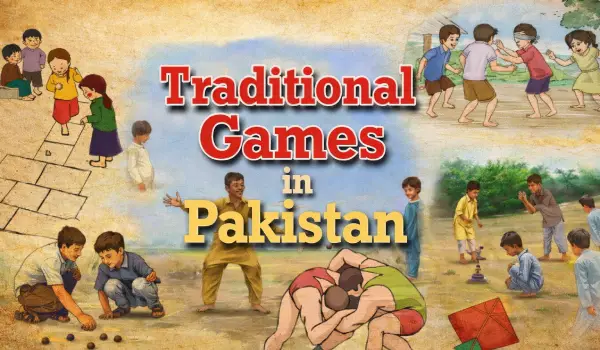
Quick Reference: Popular Traditional Games
| Game Name | Type | Players | Equipment Needed | Region |
|---|---|---|---|---|
| Gilli Danda | Outdoor Sport | 2-10 | Two sticks | All Pakistan |
| Kabaddi | Team Sport | 12-14 | None | Punjab, Sindh |
| Gulli | Outdoor | 4-10 | Stones/seeds | Rural areas |
| Kite Flying (Patang Bazi) | Aerial Sport | 2+ | Kite, string | Urban areas |
| Pithu Gol Garam | Team Game | 8-12 | 7 flat stones, ball | Punjab |
| Stapu/Kundi | Solo/Group | 1-4 | Stone, chalk | Girls mainly |
| Marbles (Kancha) | Outdoor | 2-6 | Glass marbles | All Pakistan |
| Hide and Seek (Lukam Lakki) | Group Game | 4+ | None | All Pakistan |
The Roots of Pakistani Games
The History of Traditional Games in Pakistan stretches back centuries, blending influences from ancient civilizations that once thrived on this land. The Indus Valley Civilization played board games 5,000 years ago.
When Mughals arrived, they brought polo and wrestling traditions. British colonizers introduced cricket, which we made our own.
But the real treasures are the folk games that emerged from villages and streets. These games needed no expensive equipment. A stick, some stones, a piece of cloth that’s all. Poor or rich, every child could play. That’s the beauty of traditional Pakistani games.
The History of Traditional Games in Pakistan tells the story of a nation that found joy in simplicity. Before shopping malls and internet, children created entire worlds with nothing but imagination and whatever they found lying around.
These games taught skills schools couldn’t quick thinking, physical coordination, social bonding, and how to win or lose gracefully.
1. Gilli Danda: The King of Street Games
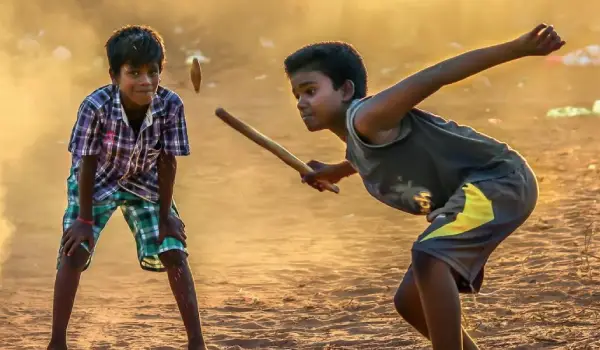
If there’s one game that defines the History of Traditional Games in Pakistan, it’s gilli danda. Two wooden sticks one small pointed stick (gilli) and one longer stick (danda).
That’s it. That’s the whole equipment list. Yet this simple game created some of the most competitive, exciting matches village streets ever saw.
How it’s played
The gilli lies on the ground. You hit one tapered end with the danda, making it flip up. While it’s in the air, you hit it as far as you can. The farther it goes, the more points you score. The opposing team tries to catch it or retrieve it quickly to prevent scoring.
Why it mattered
Gilli danda taught hand eye coordination better than any modern training. It required strategy, physical skill, and nerve. Village tournaments would draw huge crowds. Rivalries between neighborhoods lasted years, passed down through generations.
My grandfather once hit a gilli so far it landed on someone’s roof three streets away. He told that story until his last days, and we never tired of hearing it. That’s gilli danda’s legacy memories that became family legends.
Today, you rarely see gilli danda in cities. But in rural Punjab and Sindh, some villages still organize tournaments. Old men still gather to tell stories of impossible shots and legendary players from their youth.
2. Kabaddi: The Warrior’s Game
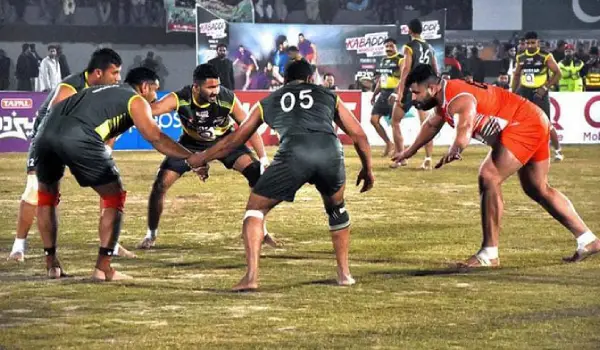
Kabaddi holds a special place in the History of Traditional Games in Pakistan. This game is pure physicality strength, strategy, breath control, and fearlessness all wrapped into one intense sport.
The basics
Two teams, each on their half of the court. One player (the raider) crosses into enemy territory while chanting “kabaddi kabaddi kabaddi” in one breath.
His job? Tag opponents and return to his side without getting caught. Opponents try to tackle and pin him before his breath runs out. If he makes it back, his team scores. If they catch him, they score.
Why it’s legendary
Kabaddi represents Pakistani and South Asian warrior spirit. It’s wrestling, racing, and strategy combined. No equipment needed. Just strength, speed, and courage.
Village kabaddi matches were serious business. Entire communities would come watch. Bets were placed. Honor was at stake. The best kabaddi players became local heroes, their names spoken with respect.
Professional kabaddi leagues exist today, but old timers say nothing matches the raw intensity of village kabaddi under the open sky.
The History of Traditional Games in Pakistan shows kabaddi spreading from Punjab’s wrestling akhaaras to becoming Pakistan’s national sport. It’s played in schools, villages, and professional arenas. Unlike many traditional games that faded away, kabaddi survived and thrived.
3. Kite Flying: The Sky Game
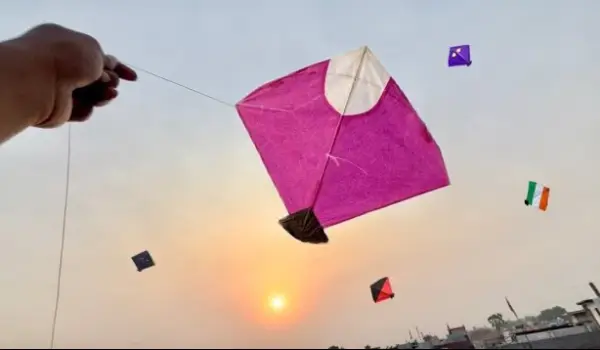
Mention the History of Traditional Games in Pakistan to anyone from Lahore, and their eyes light up at “patang bazi” (kite flying). This wasn’t just flying kites for fun. This was competitive, tactical, beautiful warfare in the skies.
How it worked
Kites made of colorful paper and bamboo frames. But the real art was in the dor (string), coated with ground glass to make it sharp. The goal? Cut opponents’ kite strings while protecting your own. Last kite flying wins.
The culture
Basant festival in Lahore was Pakistan’s biggest kite flying celebration. Thousands of kites filled the sky. Rooftops packed with people. Music played. Food cooked. The whole city celebrated. Colors everywhere red, green, yellow, blue kites dancing against clouds.
People spent months preparing. Kite makers worked overtime. The best kites cost serious money. Competitions had prizes. Families had traditions special kite designs passed down, secret dor making techniques, lucky launch times.
Sadly, safety concerns led to Basant bans in many cities. The sharp strings caused accidents. But the History of Traditional Games in Pakistan preserves this beautiful tradition.
Some rural areas still celebrate. Old kite makers still practice their craft. The dream remains that one day, safely managed Basant will return.
4. Marbles (Kancha): Pocket Sized Competition
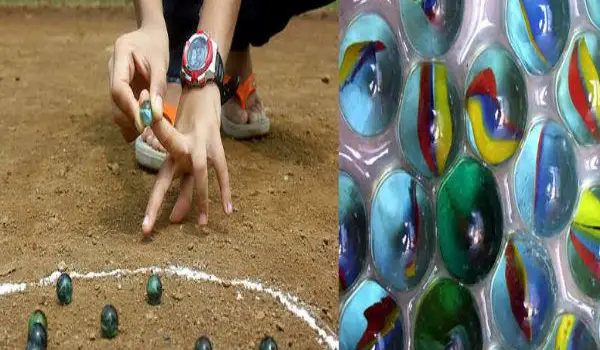
Every Pakistani kid’s pocket once jingled with glass marbles. These small colorful spheres powered hours of focused competition in every street and schoolyard.
The game
Draw a circle in dirt. Players shoot marbles trying to knock opponents’ marbles out. The circle shrinks as the game progresses. Last marble in the circle wins. Different variations existed some involving holes dug in ground, others using walls as obstacles.
The social aspect
Marble playing created its own economy. Kids traded marbles like currency. A special colored marble might be worth five regular ones. The biggest, most beautiful marble became your “shooter” your champion. Losing your favorite marble felt genuinely tragic.
Playing marbles taught geometry (angles and trajectories), physics (force and motion), and economics (value and trade) without kids realizing they were learning.
The History of Traditional Games in Pakistan includes countless marble championship stories the neighborhood kid nobody could beat, the legendary marble that never lost, the great marble heist of wherever you grew up.
5. Girls’ Games: The Other Half of History
The History of Traditional Games in Pakistan often forgets girls’ games, but they were equally rich and important.
Stapu (Hopscotch)
Draw numbered squares with chalk. Toss a stone into square one. Hop through the pattern, skipping the square with your stone. Pick up your stone on the way back. Move to square two, repeat. Sounds simple. Try doing it while your friends distract you.
Stapu taught balance, coordination, and concentration. Every school courtyard had faded stapu marks. Girls played during break, after school, while boys played cricket. Champions could hop through entire patterns without wobbling once.
Ghar Ghar (Playing House)
Before dolls came from stores, girls played house with whatever they found. Broken pottery pieces became dishes. Leaves were food. Mud was everything from furniture to babies. Elaborate imaginary households ran with serious dedication.
This wasn’t just “playing.” Girls learned household management, negotiation, problem solving, and social roles through these games. The creativity involved was remarkable.
Regional Variations
The History of Traditional Games in Pakistan varies by region. Each province, even each city, had its own games and variations.
Punjab
Dominated by gilli danda, kabaddi, and wrestling. Physical, competitive games suited Punjab’s warrior culture.
Sindh
Similar games but with local twists. Kabaddi played slightly differently. Unique games involving camel racing in desert areas.
KPK
Mountain games stone throwing competitions, tough physical challenges suited to mountainous terrain. Unique wrestling styles.
Balochistan
Nomadic influence meant portable games. Storytelling and word games alongside physical activities. Horse and camel sports.
Karachi
Being diverse, absorbed games from everywhere. Added urban twists rooftop adaptations, alley versions of field games.
Games by Season
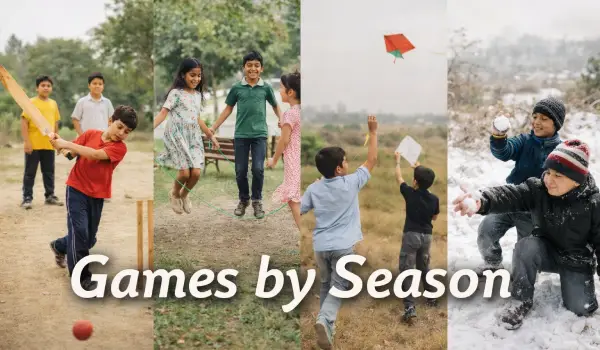
| Season | Popular Games | Why |
|---|---|---|
| Summer | Kite flying, swimming in canals | Open skies, warm weather |
| Monsoon | Indoor games, gulli | Wet ground, puddles |
| Autumn | Gilli danda, kabaddi | Perfect weather, harvest celebration |
| Winter | Patang bazi, marbles | Cool evenings, clear skies |
Why These Games Disappeared
The History of Traditional Games in Pakistan sadly includes their decline. Several factors killed street games:
Urbanization
Streets became too crowded and dangerous. Traffic replaced play space. Apartments replaced courtyards where games happened.
Technology
Video games, computers, smartphones offered easy entertainment. Traditional games required physical effort, organization, and going outside.
Academic pressure
Competition for good schools and universities left little play time. Extra classes, homework, and tutoring filled childhood.
Safety concerns
Parents worried about children playing in streets. Disappearing community trust meant less outdoor freedom.
Cultural changes
Western entertainment influenced Pakistani children. Traditional games seemed “backward” compared to modern alternatives.
What We Lost
When traditional games died, Pakistan lost more than entertainment. These games taught:
Physical fitness
Kids who played gilli danda or kabaddi stayed active naturally. No gym needed.
Social skills
Games required negotiation, teamwork, conflict resolution. Kids learned to settle disputes, follow rules, work together.
Cultural connection
Playing games grandparents played created generational bonds. Shared experiences united families.
Creativity
Limited equipment forced creative problem solving. A broken marble became a new game. A torn kite meant designing a new one.
Community
Street games brought neighborhoods together. Everyone knew everyone. Looking out for each other was natural.
Resilience
Losing games, getting bruised, dealing with disappointment all part of life lessons these games taught.
Revival Efforts
The History of Traditional Games in Pakistan continues with revival efforts. Some organizations work to preserve traditional games:
Schools
Some incorporate traditional games in PE classes. Kids learn gilli danda and kabaddi alongside cricket and football.
Cultural festivals
Cultural Festivals events showcase traditional games. Demonstrations, competitions, workshops keep knowledge alive.
NGOs
Organizations document games, teach them to new generations, organize tournaments.
Social media
Videos of traditional games gain popularity. Nostalgia drives interest in preserving traditions.
Rural areas
Villages maintain traditions cities lost. Annual melas (fairs) still feature traditional game competitions.
How Traditional Games Influence Modern Pakistan
Despite decline, the History of Traditional Games in Pakistan shaped modern Pakistani culture:
Cricket adoption
Pakistan embraced cricket partly because it shared elements with gilli danda hitting, running, fielding.
Kabaddi leagues
Professional kabaddi shows traditional games can modernize successfully.
Sports infrastructure
Understanding children need play space influenced park and playground development.
Physical education
Recognition that play matters shaped school curriculum.
National identity
Traditional games remain symbols of Pakistani culture in art, literature, and film.
FAQs
What are the most popular traditional games in Pakistan?
Gilli danda, kabaddi, kite flying, marbles, and pithu gol garam are the most widely played traditional games across Pakistan.
Why are traditional games disappearing?
Urbanization, technology, academic pressure, safety concerns, and cultural changes have reduced space and time for traditional street games.
Is kabaddi still played professionally in Pakistan?
Yes, Pakistan has professional kabaddi leagues with teams, tournaments, and significant viewership, especially in rural areas.
What skills do traditional games teach children?
Physical coordination, teamwork, strategic thinking, social interaction, resilience, creativity, and problem solving through active play.
Are traditional games part of school curriculum?
Some schools include traditional games in physical education, but most focus on modern sports like cricket and football.
Can traditional games be played in modern urban settings?
Modified versions work in parks and playgrounds, though space constraints and safety concerns limit traditional street play.
What role did girls have in traditional Pakistani games?
Girls played stapu, ghar ghar, and other games with rich traditions, though often separate from boys’ games.
How does History of Traditional Games in Pakistan connect to culture?
Traditional games reflect Pakistani values of community, physical strength, strategic thinking, and social bonding across generations.
Conclusion
The History of Traditional Games in Pakistan is the history of joy, community, and childhood itself. These games built the character of generations who grew up playing them.
They created neighborhoods where everyone knew everyone. They kept children active, social, and connected to their culture.
Today’s children live differently. Technology offers entertainment our grandparents couldn’t imagine. But something valuable was lost when streets emptied of playing children.
The sounds of gilli hitting danda, the sight of kites filling skies, the excitement of kabaddi matches these things shaped Pakistani identity.
The History of Traditional Games in Pakistan doesn’t have to end. Revival efforts show these games can survive if we choose to preserve them. Schools can teach them. Parents can play them with children. Communities can organize tournaments. The knowledge, the skills, the joy all can return.
Traditional games are not just fun they’re living history, cultural identity, and the sound of laughter that connects generations across time.