

The Badshahi Mosque, known as the ‘Emperor’s Mosque,’ is an architectural marvel that stands as a testament to the grandeur of the Mughal Empire.
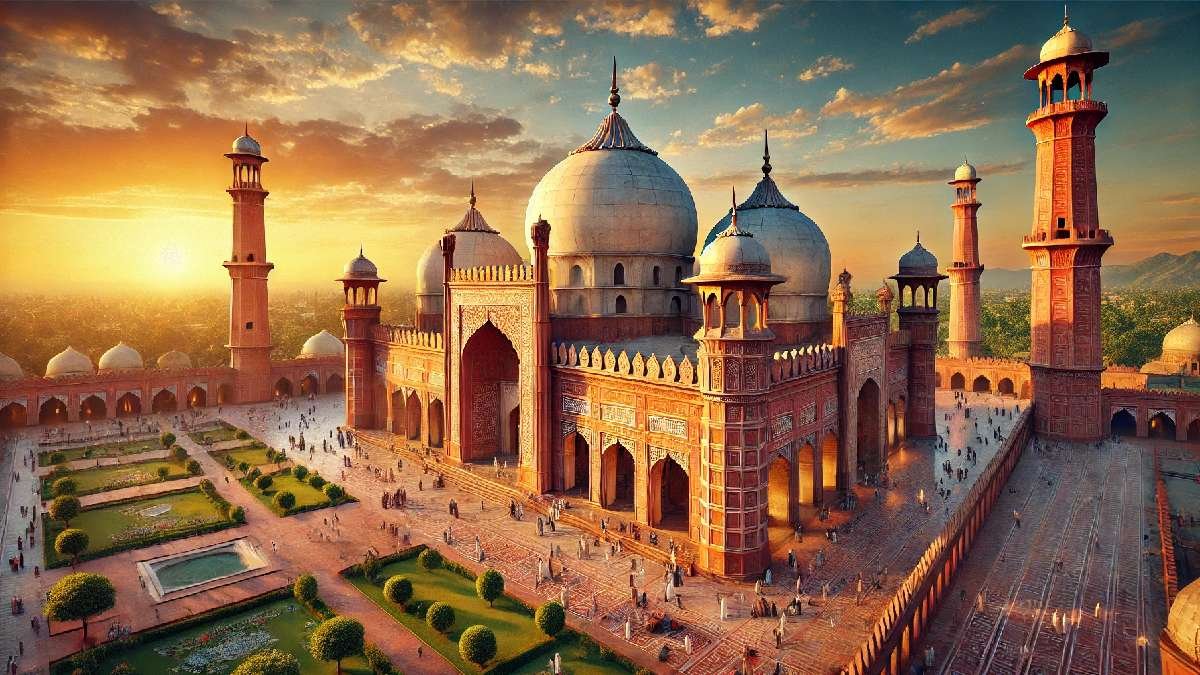
Located in the heart of Lahore, Pakistan, this mosque is one of the largest and most impressive in the world. Its majestic red sandstone and white marble structure, adorned with intricate frescoes and calligraphy, epitomizes the zenith of Mughal architectural prowess.
The Badshahi Mosque is not just a place of worship; it is a symbol of cultural heritage, religious devotion, and historical significance that continues to captivate visitors from around the globe.
Historical Background

The Badshahi Mosque was commissioned by the sixth Mughal Emperor, Aurangzeb Alamgir, in 1671. It was completed in 1673, during a period when the Mughal Empire was at its zenith, extending across much of the Indian subcontinent.
Aurangzeb, known for his piety and dedication to Islam, sought to create a mosque that would symbolize the power and religious fervor of his reign.
The chief architect of the mosque was Nawab Zain Yar Jang Bahadur, who drew inspiration from the Jama Masjid in Delhi, built by Aurangzeb’s father, Emperor Shah Jahan.
The construction of the mosque involved thousands of laborers and artisans, who worked tirelessly to bring Aurangzeb’s vision to life. The mosque was inaugurated with great pomp and ceremony, reflecting its importance as a symbol of the Mughal Empire’s religious and political authority.
Architectural Features
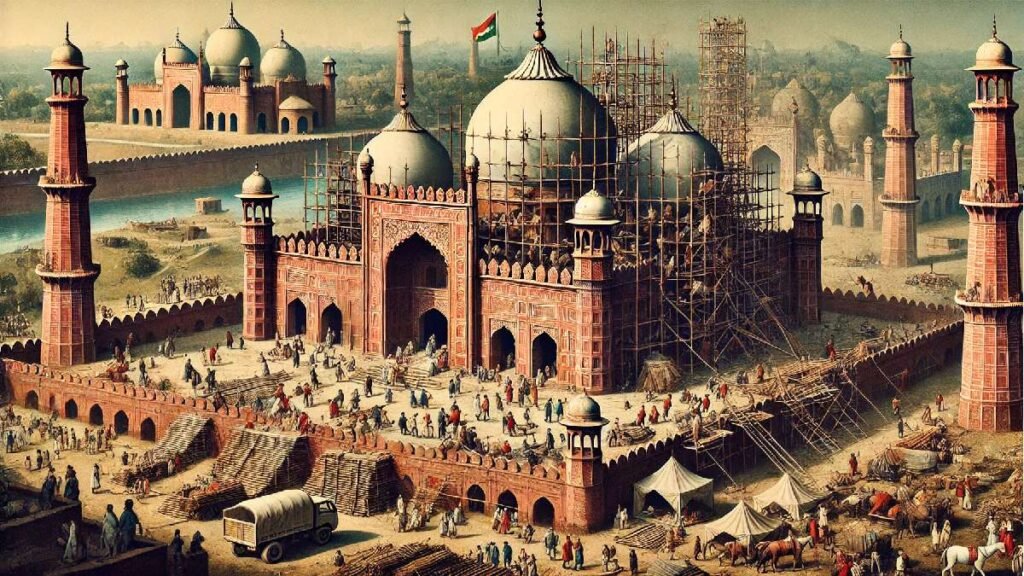
The Badshahi Mosque is renowned for its architectural grandeur and exquisite detailing. Covering an area of approximately 276,000 square feet, it can accommodate up to 55,000 worshippers, making it one of the largest mosques in the world.
The mosque’s design is characterized by its symmetrical layout, massive scale, and the harmonious blending of red sandstone and white marble.
Main Prayer Hall and Domes

The main prayer hall of the Badshahi Mosque is a striking example of Mughal architectural brilliance. It features a vast central chamber flanked by smaller prayer rooms on either side.
The hall is topped by three large marble domes, which are a defining feature of the mosque. The largest central dome is flanked by two smaller domes on either side.
These domes are not only structurally impressive but also enhance the acoustic properties of the prayer hall, allowing the call to prayer to resonate throughout the mosque.
Minarets

The mosque is adorned with four towering minarets, each standing at a height of 176 feet. These minarets are strategically positioned at the four corners of the mosque, providing a sense of balance and symmetry.
Each minaret is divided into three sections, with balconies offering panoramic views of Lahore. The minarets are architectural marvels and serve as a call to prayer, reminding the faithful of their religious duties.
Courtyard
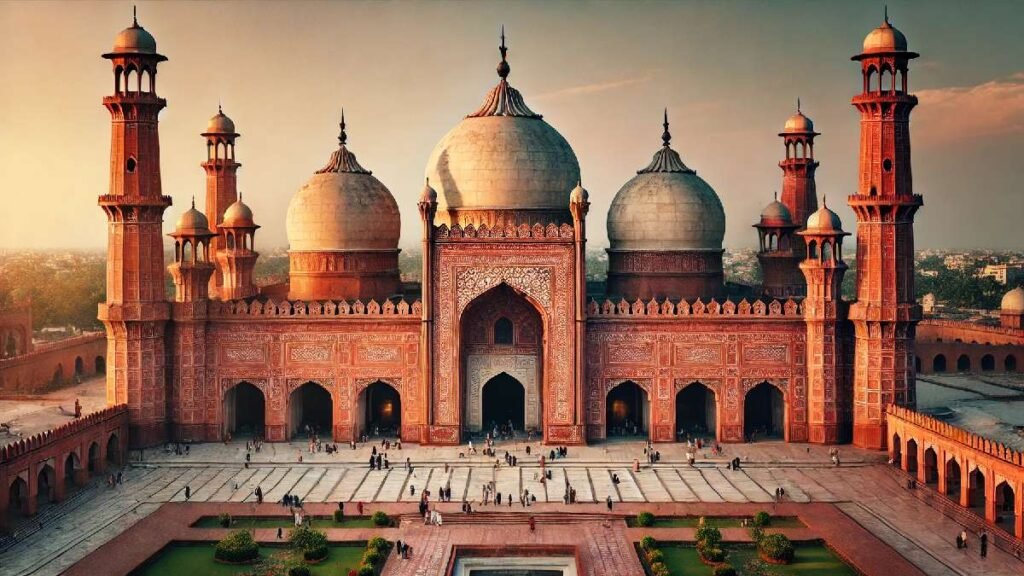
The mosque’s expansive courtyard is one of the largest in the world, capable of accommodating tens of thousands of worshippers. The courtyard is paved with red sandstone, which contrasts beautifully with the white marble of the mosque’s façade.
The open space of the courtyard creates a sense of tranquillity and openness, providing worshippers with a serene environment for prayer and reflection.
Entrance Gateways
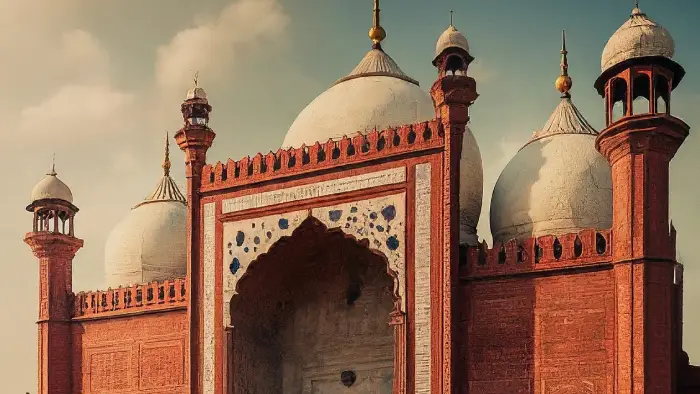
The Badshahi Mosque features three grand entrance gateways, each adorned with intricate frescoes and calligraphy. The main entrance is on the eastern side, facing the historic Lahore Fort. This entrance is particularly noteworthy for its elaborate detailing and the use of pietra dura (stone inlay), which adds to the overall grandeur of the mosque.
Artistic Details
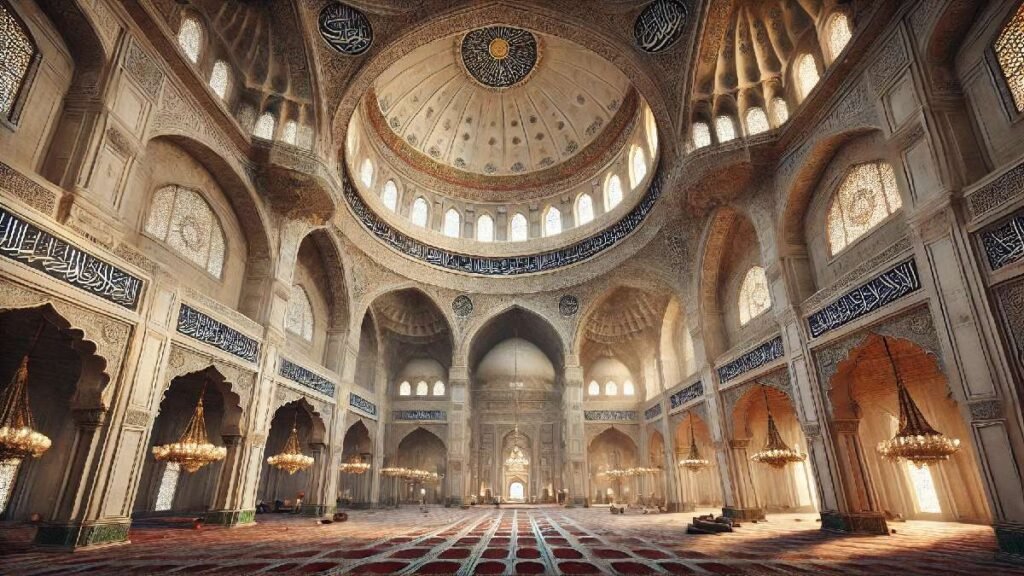
The mosque’s interior and exterior are adorned with exquisite artistic details, including intricate frescoes, calligraphy, and tile work. The frescoes depict floral and geometric patterns, reflecting the Mughal love for nature and symmetry.
The calligraphy features verses from the Quran, written in elegant scripts that enhance the spiritual ambiance of the mosque. Using inlaid marble and precious stones further adds to the mosque’s aesthetic appeal.
Cultural and Religious Significance
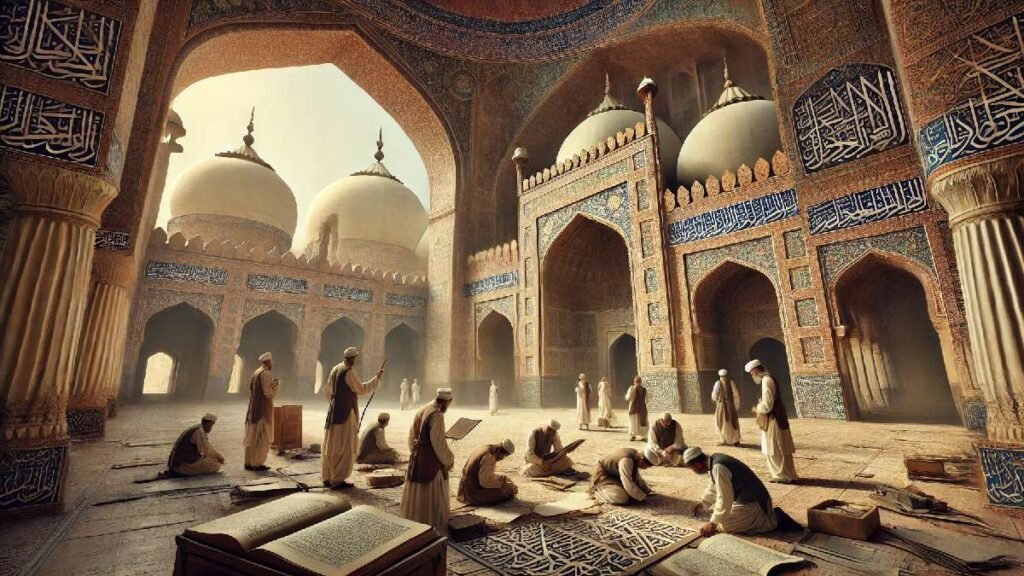
The Badshahi Mosque holds immense cultural and religious significance, serving as a focal point for the Muslim community in Lahore and beyond. It has been the site of numerous important religious ceremonies, political events, and cultural gatherings, making it a vital part of Pakistan’s heritage.
Role in Islamic Worship
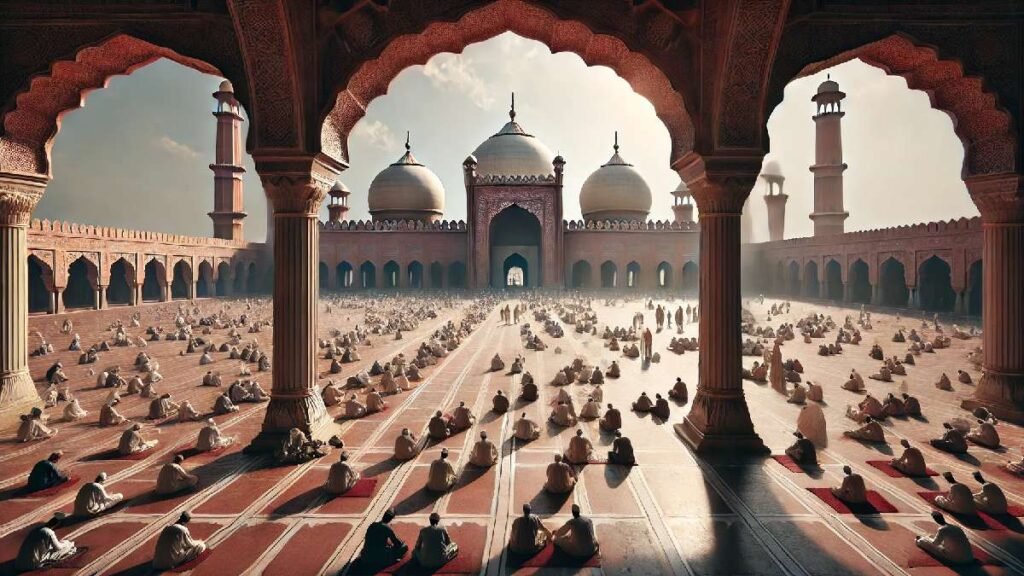
As a place of worship, the Badshahi Mosque has been at the heart of Lahore’s Islamic community for centuries. It hosts the daily prayers, Friday congregational prayers, and special prayers during Islamic festivals such as Eid al-Fitr and Eid al-Adha.
The mosque’s vast capacity allows it to accommodate large gatherings, fostering a sense of unity and community among worshippers.
Historical Events and Notable Ceremonies
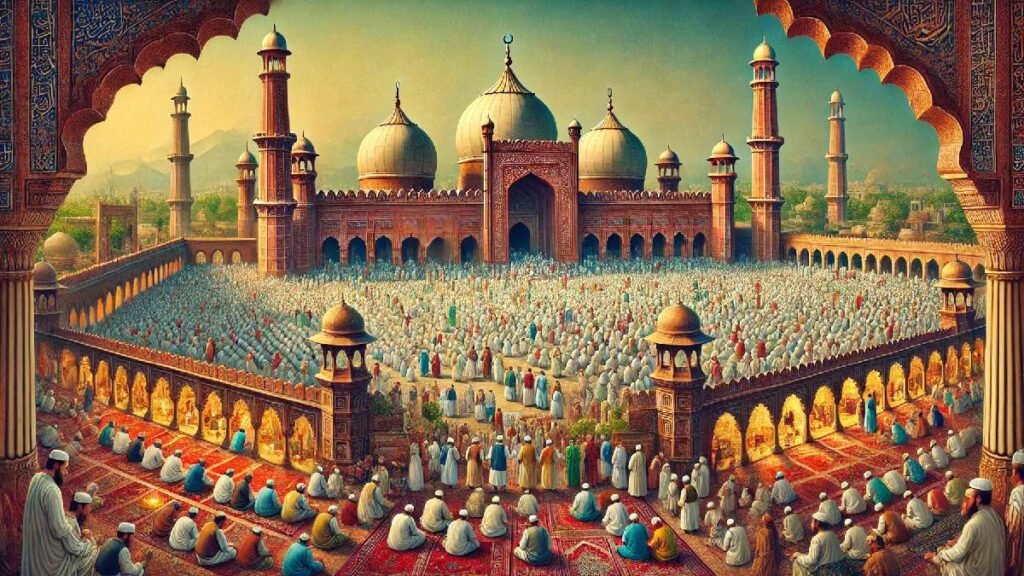
Throughout its history, the Badshahi Mosque has been the backdrop for numerous significant events. It has hosted visits from foreign dignitaries, including heads of state and religious leaders.
During the British colonial period, the mosque was used for various administrative purposes, reflecting its importance as a landmark in Lahore. In more recent times, the mosque has been the site of national celebrations and cultural events, highlighting its continued relevance in contemporary society.
Preservation of Islamic Art and Culture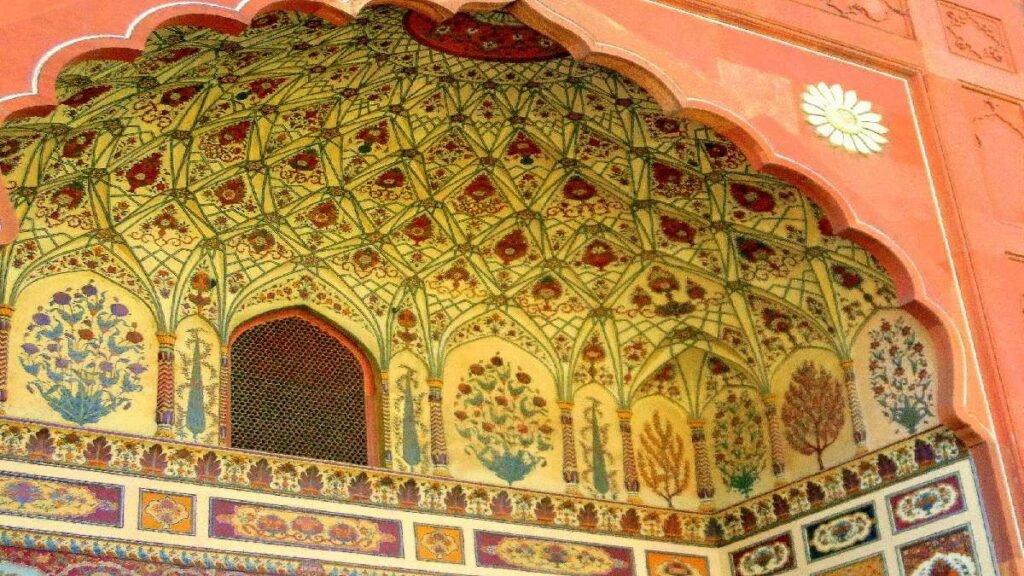
The Badshahi Mosque is a repository of Islamic art and culture, preserving the artistic traditions of the Mughal era. The mosque’s intricate frescoes, calligraphy, and tile work are fine examples of Mughal craftsmanship, showcasing the empire’s commitment to beauty and artistic excellence.
The mosque also houses relics of the Prophet Muhammad, including his cloak and slippers, which attract pilgrims from across the Muslim world.
Modern-Day Relevance

Despite being over three centuries old, the Badshahi Mosque continues to be a vibrant part of Lahore’s cultural and religious landscape. Efforts have been made to preserve its structural integrity and aesthetic beauty, ensuring that future generations can continue to admire and utilize this architectural masterpiece.
Restoration and Conservation
Over the years, various restoration projects have been undertaken to preserve the mosque’s architectural and artistic heritage. These efforts have focused on repairing structural damage, cleaning and conserving frescoes and calligraphy, and ensuring the stability of the minarets and domes.
The restoration work has been carried out with great care, using traditional materials and techniques to maintain the mosque’s historical authenticity.
Tourist Attraction

The Badshahi Mosque is one of Pakistan’s most popular tourist attractions, drawing visitors worldwide. Its architectural grandeur, historical significance, and cultural heritage make it a must visit destination for tourists.
The mosque’s location in the heart of Lahore, near other historical landmarks such as the Lahore Fort and the Shalimar Gardens, further enhances its appeal to visitors.
Impact on Local Economy

The influx of tourists to the Badshahi Mosque positively impacts the local economy, generating revenue for the city and providing employment opportunities for residents.
The mosque’s presence has also led to the development of surrounding areas, with shops, restaurants, and hotels catering to visitors’ needs. The mosque’s role as a cultural and historical landmark thus contributes to the economic vitality of Lahore.
Conclusion
The Badshahi Mosque stands as a monumental testament to the grandeur and artistic excellence of the Mughal Empire. Its architectural beauty, cultural significance, and historical importance make it a cherished landmark in Pakistan.
The Badshahi Mosque is not just a building; it is a living legacy of a glorious past, a beacon of faith, and a symbol of cultural heritage. Its towering minarets, majestic domes, and expansive courtyard stand as a testament to the ingenuity and vision of the Mughal architects and artisans who created it.
As we admire its beauty and reflect on its history, we are reminded of the rich cultural tapestry that defines our shared heritage and the enduring legacy of the Mughal Empire.
FAQs
What is Badshahi Mosque famous for?
The Badshahi Mosque is famous for its grand Mughal architecture, massive courtyard, and historical importance as one of the largest mosques in the world.
Who is buried in Badshahi Mosque?
No one is buried inside the mosque, but the tomb of Allama Iqbal is located next to it.
Why should I visit Badshahi Mosque?
You should visit to experience its stunning architecture, peaceful atmosphere, and rich Mughal history.
What is the dress code for Badshahi Mosque?
Visitors must dress modestly, cover shoulders and legs, women should cover their heads, and shoes must be removed before entry.
When was Badshahi Mosque built?
Badshahi Mosque was built in 1673 during the reign of Emperor Aurangzeb.
Where is Badshahi Mosque located?
It is located in Lahore, Punjab, Pakistan, near the historic Lahore Fort.
How big is Badshahi Mosque?
It can accommodate over 100,000 worshippers in its courtyard and prayer hall.
Who built Badshahi Mosque?
The mosque was commissioned by Mughal Emperor Aurangzeb.
Is entry to Badshahi Mosque free?
Yes, entry to the mosque is free for visitors.
For more informative blogs visit Visual Pakistan.