
My uncle Rashid lived next to a Hindu family in Lahore for twenty years. When his neighbor’s mother passed away, Uncle Rashid was there first helping with arrangements, bringing food, sitting with them through their grief.
Years later when Uncle Rashid had a heart attack, that same neighbor rushed him to the hospital and stayed with our family until he recovered. “This is what neighbors are supposed to be,” Uncle Rashid always said.
That story captures the essence of the Rights of Neighbors in Islam. Islam doesn’t just recommend being nice to neighbors it makes it a religious obligation.
The Quran and Hadith contain detailed teachings about how we should treat those living near us, regardless of their faith, ethnicity, or social status.
Let me walk you through exactly what Islam teaches about neighbor rights, backed by Quranic verses and authentic Hadith. This isn’t theory it’s practical guidance that transforms communities.

What Islam Says About Neighbors: The Foundation
The Rights of Neighbors in Islam are so important that اللَّهُ mentions them directly in the Quran alongside worshipping Him and respecting parents.
Quran says
وَاعْبُدُوا اللَّهَ وَلَا تُشْرِكُوا بِهِ شَيْئًا ۖ وَبِالْوَالِدَيْنِ إِحْسَانًا وَبِذِي الْقُرْبَىٰ وَالْيَتَامَىٰ وَالْمَسَاكِينِ وَالْجَارِ ذِي الْقُرْبَىٰ وَالْجَارِ الْجُنُبِ
“Worship اللَّهُ and associate nothing with Him, and to parents do good, and to relatives, orphans, the needy, the near neighbor, the neighbor farther away…”
(Quran 4:36)
Notice how اللَّهُ specifically mentions “near neighbor” and “neighbor farther away” emphasizing that both have rights upon you. The Rights of Neighbors in Islam extend to everyone living around you, whether they’re next door or several houses away.
The Prophet Muhammad ﷺ emphasized this repeatedly. He said:
مَا زَالَ جِبْرِيلُ يُوصِينِي بِالْجَارِ حَتَّى ظَنَنْتُ أَنَّهُ سَيُوَرِّثُهُ
“Jibreel kept advising me about the neighbor until I thought he would make him an heir.”
(Bukhari and Muslim)
This Hadith shows that Angel Jibreel continuously reminded the Prophet ﷺ about neighbor rights highlighting their extraordinary importance in Islam.
Who Counts as Your Neighbor?
The Rights of Neighbors in Islam apply to several categories:
Immediate neighbors
Those living directly next to you on either side, across the street, behind you.
Nearby neighbors
Those living within 40 houses in any direction (according to some scholars).
Traveling companions
During journeys, fellow travelers are considered temporary neighbors.
Workplace neighbors
Colleagues sitting near you have neighbor rights.
Mosque neighbors
People who regularly pray beside you. Islam doesn’t limit neighbor rights to Muslims. Your non-Muslim neighbor has the same rights. Prophet Muhammad ﷺ treated Jewish and Christian neighbors with respect and kindness.
Essential Rights of Neighbors: What You Must Do

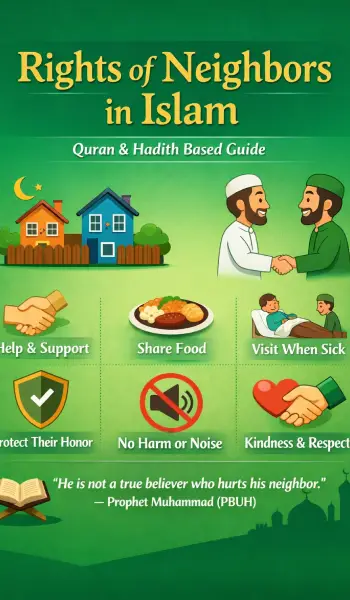
Understanding the Rights of Neighbors in Islam requires knowing specific obligations. Here are the key rights backed by Quran and Hadith.
1. Do Not Harm Them
The most basic right is avoiding harm physical, verbal, or emotional. Prophet Muhammad ﷺ said:
وَاللَّهِ لَا يُؤْمِنُ، وَاللَّهِ لَا يُؤْمِنُ، وَاللَّهِ لَا يُؤْمِنُ
“By اللَّهُ, he does not believe! By اللَّهُ, he does not believe! By اللَّهُ, he does not believe!”
They asked,
مَنْ يَا رَسُولَ اللَّهِ؟
“Who, O Messenger of اللَّهُ?”
He said,
الَّذِي لَا يَأْمَنُ جَارُهُ بَوَائِقَهُ
“The one whose neighbor is not safe from his harm.” (Bukhari)
This means:
- Don’t make excessive noise disturbing them
- Don’t block their entrance or parking
- Don’t let your children or pets damage their property
- Don’t spread rumors or talk badly about them
- Don’t build anything that invades their privacy
The Rights of Neighbors in Islam begin with this negative command do no harm. Before you do good, ensure you’re not causing problems.
2. Help When They Need It
Prophet Muhammad ﷺ said:
لَيْسَ الْمُؤْمِنُ الَّذِي يَشْبَعُ وَجَارُهُ جَائِعٌ إِلَى جَنْبِهِ
“He is not a believer whose stomach is filled while his neighbor goes hungry.”
(Authenticated by Al-Albani)
Help includes:
- Sharing food regularly, especially during cooking special meals
- Assisting during illness, moving, or family emergencies
- Lending items they need temporarily
- Providing emotional support during difficult times
- Helping with tasks they struggle with due to age or disability
3. Be Patient with Their Mistakes
Your neighbor might do things that annoy you. The Rights of Neighbors in Islam include bearing their minor faults with patience.
A man complained to Prophet Muhammad ﷺ about his neighbor’s behavior. The Prophet ﷺ told him repeatedly to bear it patiently. When the man kept complaining, the Prophet ﷺ finally said to put his belongings outside his house.
When people asked why, he should tell them his neighbor troubled him. The neighbor, feeling ashamed, apologized and corrected his behavior. (Abu Dawud)
This teaches that patience, not confrontation, is the first response.
4. Protect Their Honor and Property
When your neighbor isn’t home, their property and family become your responsibility. The Rights of Neighbors in Islam make you a guardian of their house and reputation.
This means:
- Watch for suspicious activity near their home
- Accept packages and keep them safe
- Don’t speak ill of them in their absence
- Don’t allow anyone to badmouth them
- Protect their honor as you’d protect your own
5. Visit When Sick and Console in Grief
When your neighbor falls ill, visiting them is from the Rights of Neighbors in Islam. When they lose a loved one, attending the funeral and offering condolences is obligatory.
Prophet Muhammad ﷺ said:
لِكُلِّ مُسْلِمٍ عَلَى الْمُسْلِمِ سِتُّ حُقُوقٍ
“The rights of one Muslim over another are six.”
When asked what they were?
وَمَا هُنَّ يَا رَسُولَ اللَّهِ؟ He mentioned:
الْجَنَازَةُ، وَالْمَرِيضُ، وَالْعَرِيفُ، وَالْفَرِيقُ، وَالصَّدَقَةُ، وَالْكَلِمَةُ الطَّيِّبَةُ
Attending funerals and visiting the sick. (Muslim)
6. Show Kindness and Good Manners
Simple acts of kindness matter. Greeting warmly, smiling when you meet, asking about their well being, congratulating on happy occasions these fulfill the Rights of Neighbors in Islam.
Prophet Muhammad ﷺ said:
خِيَارُ الْأَصْحَابِ عِنْدَ اللَّهِ خِيَارُهُمْ لِأَصْحَابِهِ، وَخِيَارُ الْأَجِيرَةِ عِنْدَ اللَّهِ خِيَارُهُمْ لِجِيرَانِهِ
“The best of companions in the sight of اللَّهُ is the best of them to his companion, and the best of neighbors to اللَّهُ is the best of them to his neighbor.” (Tirmidhi)
7. Give Good Advice When Needed
If you see your neighbor heading toward something harmful, gently advise them. But do it privately and respectfully. Public criticism violates their rights.
8. Respect Their Privacy
Don’t spy on your neighbors. Don’t stand where you can see into their windows or yard. The Rights of Neighbors in Islam include protecting their privacy strictly.
اللَّهُ says in Quran:
وَلَا تَجَسَّسُوا وَلَا يَغْتَب بَعْضُكُم بَعْضًا
“Do not spy or backbite one another.” (49:12)
This applies especially to neighbors whose homes are closest to yours.
Categories of Neighbors and Their Rights
| Neighbor Type | Who They Are | Their Rights |
|---|---|---|
| Muslim neighbor who is also a relative | Related to you by blood and lives nearby | Triple rights: as Muslim, as neighbor, as relative |
| Muslim neighbor | Fellow Muslim living near you | Double rights: as Muslim and as neighbor |
| Non-Muslim neighbor | Any non-Muslim living near you | Full neighbor rights regardless of faith |
| Good neighbor | Kind, respectful neighbor | All rights plus your gratitude and extra kindness |
| Difficult neighbor | Troublesome or unfriendly | All rights plus extra patience from you |
| Poor neighbor | Struggling financially | All rights plus charity and extra help |
| Elderly neighbor | Advanced age, may need assistance | All rights plus special care and attention |
Consequences of Violating Neighbor Rights
The Rights of Neighbors in Islam carry serious consequences when violated. Prophet Muhammad ﷺ warned severely about this.
Hadith says:
مَنْ آمَنَ بِاللَّهِ وَالْيَوْمِ الْآخِرِ فَلَا يُؤْذِي جَارَهُ
“Whoever believes in اللَّهُ and the Last Day should not harm his neighbor.” (Bukhari and Muslim)
The Prophet ﷺ also said a person who harms his neighbor won’t enter Paradise. This doesn’t mean temporary prohibition it emphasizes the severity of this sin.
Stories from early Muslims show people being extremely careful. Companions of the Prophet ﷺ would send portions of their meals to neighbors even during their own hardship. They understood that Rights of Neighbors in Islam are non negotiable.
Practical Application: What To Do Daily

Understanding theory matters, but practice matters more. Here’s how to apply the Rights of Neighbors in Islam in modern life.
Daily Actions
Morning
Greet neighbors warmly when you see them. Even a smile and “السلام عليكم” fulfills part of their rights.
During the day
Keep noise levels reasonable. Don’t play loud music, shout unnecessarily, or cause disturbances.
Evening
If cooking something special, share a small portion with neighbors. This simple act follows the Sunnah.
Night
Keep especially quiet so neighbors can sleep peacefully.
Weekly Actions
Once a week
Check on neighbors you haven’t seen recently. A quick knock, “Everything okay?” goes a long way.
Friday
If making special food for Jummah, share with neighbors.
Weekend
Offer help if you notice neighbor doing yard work or difficult tasks.
Special Occasions
Eid and celebrations
Share food, give gifts to neighbor’s children, invite them if appropriate in Eid or any celebrations
Illness
Visit, bring food, offer to help with errands or watching children.
Death
Attend funeral regardless of how close you were. Bring food to the family. Offer practical help.
Moving in/out
Help with heavy lifting, provide information about the neighborhood, welcome new neighbors warmly.
Common Situations and Islamic Guidance
Noisy Neighbors
If your neighbor makes excessive noise, approach them kindly and privately. Explain the situation respectfully. Most people don’t realize they’re causing problems. The Rights of Neighbors in Islam include gentle advice before complaints.
If they don’t improve after polite requests, involve community elders or authorities as a last resort, still maintaining respectful communication.
Property Disputes
When boundaries or property issues arise, seek peaceful resolution. Consult neutral arbitrators. Avoid legal battles if possible. Prophet Muhammad ﷺ emphasized that giving up some of your right for the sake of peace is better than fighting with neighbors.
Different Faith Neighbors
The Rights of Neighbors in Islam don’t change based on your neighbor’s religion. Prophet Muhammad ﷺ had Jewish neighbors he treated kindly. When a Jewish neighbor died, the Prophet ﷺ attended the funeral.
Treat them with the same kindness, share food, help when needed, maintain good relations. Your behavior might be the only Islam they ever witness.
Troublesome Neighbors
Even if your neighbor mistreats you, Islam requires you to fulfill their rights. You don’t return evil for evil. The Rights of Neighbors in Islam remain obligatory regardless of how they treat you.
Prophet Muhammad ﷺ said the best neighbor isn’t the one who returns good for good everyone does that. The best neighbor is the one who does good even when receiving bad treatment.
Stories from Islamic History
1. Abu Dharr Al-Ghifari (may اللَّهُ be pleased with him) reported the Prophet ﷺ said:
يَا أَبَا ذَرٍّ، إِذَا طَبَخْتَ الْحِلِيبَ فَأَكْثِرْ فِيهِ الْمَاءَ وَأَعْطِ جِيرَانَكَ مِنْهُ
“O Abu Dharr, when you cook broth, add extra water and give some to your neighbors.” (Muslim)
Notice the specific, practical instruction. Not just “be nice” but “add extra water” meaning plan to share from the beginning.
2. Abdullah ibn Umar (may اللَّهُ be pleased with him) would slaughter a sheep and ask his servant, “Have you given any to our Jewish neighbor?” He would repeat this question multiple times, emphasizing the neighbor’s right to receive meat.
3. Abu Hurayrah (may اللَّهُ be pleased with him) reported: A man said, “O Messenger of اللَّهُ, such and such woman is known for her much prayer, fasting, and charity, but she harms her neighbors with her tongue.” The Prophet ﷺ said,
هِيَ فِي النَّارِ
“She is in the Fire.” (Ahmad)
This shows that worship without good character toward neighbors is worthless.
Teaching Children About Neighbor Rights
The Rights of Neighbors in Islam should be taught early so children grow up understanding their importance.
Practical steps
- Take children when visiting sick neighbors
- Have them help deliver food to neighbors
- Teach them to greet neighbors respectfully
- Explain why we don’t make noise disturbing others
- Share stories of Prophet’s treatment of neighbors
- Praise them when they show kindness to neighbors
Children who learn these values young become considerate adults who maintain strong communities.
What Breaks Neighbor Rights
To understand the Rights of Neighbors in Islam completely, know what violates them:
- Harming them physically or verbally
- Invading their privacy
- Stealing from them or coveting their property
- Spreading rumors or gossip about them
- Being stingy when they’re in need
- Ignoring them during hardship
- Blocking their sunlight or views unnecessarily
- Causing bad odors affecting them
- Letting your property deteriorate affecting neighborhood
- Being arrogant or looking down on them
Modern Challenges and Islamic Solutions
Apartment Living
Living in apartments creates unique situations. The Rights of Neighbors in Islam extend to those above, below, and beside you.
Specific considerations
- Control noise no loud walking, moving furniture at odd hours, or loud music
- Be mindful of cooking smells
- Keep common areas clean
- Respect parking assignments
- Attend to crying babies promptly
- Maintain proper bathroom use to avoid plumbing problems affecting others
Social Media and Neighbors
Don’t post about neighbors without permission. Don’t share their personal information. Don’t photograph their homes or families. Privacy rights extend to digital spaces.
Working from Home
If you work from home, ensure your business activities don’t disturb neighbors with excess traffic, noise, or other impacts.
Signs of Good Neighboring
You know you’re fulfilling the Rights of Neighbors in Islam when:
- Neighbors greet you warmly
- They feel comfortable asking for help
- You know about their major life events
- They invite you to celebrations
- Children of different households play together
- People look out for each other’s property
- The community feels safe and connected
- Conflicts are rare and resolved quickly
- Everyone knows they can count on each other
FAQs
What are the main Rights of Neighbors in Islam?
Not harming them, helping when needed, sharing food, protecting their property and honor, visiting when sick, and showing general kindness and good manners.
Do neighbor rights apply to non-Muslims?
Yes, all neighbor rights in Islam apply regardless of your neighbor’s religion, race, or background.
What does Islam say about noisy neighbors?
Approach them politely and privately first; excessive noise violates neighbor rights, but respond with patience and kind communication initially.
How far does neighbor rights extend?
Islamic scholars say neighbor rights extend to 40 houses in each direction, though immediate neighbors have the strongest rights.
What if my neighbor treats me badly?
You must still fulfill their rights; the Rights of Neighbors in Islam don’t depend on how they treat you.
Should I share food with neighbors?
Yes, Prophet Muhammad ﷺ specifically instructed to share food with neighbors, especially when cooking special meals.
What are consequences of violating neighbor rights?
Prophet Muhammad ﷺ warned that those who harm neighbors show incomplete faith and face serious consequences in the Hereafter.
Can I complain about my neighbor?
Gentle, private advice is allowed when necessary, but public complaining, gossip, or backbiting violates their rights.
Do relatives who are neighbors have extra rights?
Yes, if your neighbor is also a relative, they have triple rights as a Muslim, as a neighbor, and as family.
What’s the best way to start fulfilling neighbor rights?
Begin with simple gestures greeting warmly, sharing food occasionally, offering help during visible need, and avoiding harm.
Conclusion
The Rights of Neighbors in Islam aren’t optional they’re fundamental to being a good Muslim. When Angel Jibreel kept reminding the Prophet ﷺ about neighbors, it showed how critical this is.
Think about Uncle Rashid and his Hindu neighbor their friendship proved that fulfilling the Rights of Neighbors in Islam builds communities where people genuinely care for each other.
Start today with small actions. Greet your neighbor, share food, check on the elderly nearby, help new families settling in. The Rights of Neighbors in Islam provide the blueprint for strong communities.
The Prophet ﷺ built Madinah’s peaceful society by emphasizing these rights, and we can do the same.
Your neighbor is someone اللَّهُ mentioned in the Quran, someone whose rights determine your Hereafter standing. Fulfill the Rights of Neighbors in Islam, and you fulfill a major part of Islam. Ignore them, and your worship loses its value. Be the neighbor Islam calls you to be.
Good neighbors are blessings, and being a good neighbor is an act of worship the Rights of Neighbors in Islam connect faith with daily life in the most beautiful way.