

Every time petrol prices jump, everyone in Pakistan feels it. Your monthly budget gets messed up. Bus fares go up. Even your grocery bill increases because transport costs more.
I have a friend who works as a delivery rider. He tells me that even when the Petrol Price in Pakistan goes up by just Rs. 5, it eats into his daily earnings. He has to either work longer hours or earn less.
That’s why keeping track of the Petrol Price in Pakistan isn’t just about numbers it’s about your wallet, your budget, and your daily life.
This guide covers everything: today’s rates, why prices keep jumping around, who actually sets them, and how all this hits your pocket. We’ll share real stories from people dealing with fuel costs and give you simple tips to save money.
And if you’re also tracking other rates like gold prices in Pakistan or diamond prices, we’ve got helpful info for that too.
Latest Petrol and Diesel Prices in Pakistan(January 2026)
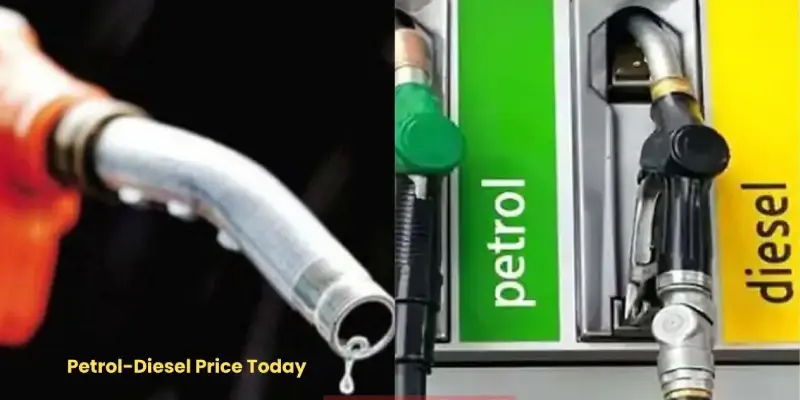
Here’s what you’re paying right now:
| Fuel Type | Price (PKR per Litre) |
|---|---|
| Petrol | Rs. 338.50 |
| High Speed Diesel (HSD) | Rs. 335.20 |
| Kerosene Oil | Rs. 168.40 |
| Light Diesel Oil (LDO) | Rs. 193.50 |
Last updated: 15 January 2026
The Petrol Price in Pakistan gets reviewed every two weeks. It changes based on international oil prices, how strong or weak the rupee is, and what taxes the government decides to add.
Who Actually Decides the Petrol Price in Pakistan?
Ever wondered who’s responsible when you’re paying more at the pump?
OGRA Does the Math
OGRA (Oil and Gas Regulatory Authority) is like the calculator guy. They check:
- What’s happening with global oil prices
- How much it costs to import oil
- Distribution and transport costs across Pakistan
Then they suggest what the new Petrol Price in Pakistan should be.
Ministry of Finance Makes the Final Call
The Finance Ministry looks at OGRA’s suggestion and decides. They can:
- Accept it as is
- Add more taxes (which happens a lot)
- Give some relief by reducing taxes (rare, but happens before elections)
Their decision is what you see at the pump. The final Petrol Price in Pakistan is basically OGRA’s math plus government’s taxes and politics.
Why the Petrol Price in Pakistan Keeps Changing
If you feel like fuel prices never stay the same, you’re right. Here’s why:
Global Oil Prices Go Crazy
Pakistan doesn’t produce enough oil. We import it. So when oil prices jump internationally because of wars, OPEC decisions, or supply issues the Petrol Price in Pakistan follows.
Recent example: When tensions increased in the Middle East in late 2025, global oil shot up. Pakistan felt it immediately.
Dollar is King (And That’s a Problem)
We buy oil in dollars. When the rupee gets weaker against the dollar, we need more rupees to buy the same amount of oil.
Simple math: If oil costs $100 per barrel and:
- Dollar is at Rs. 280 = Rs. 28,000 per barrel
- Dollar jumps to Rs. 295 = Rs. 29,500 per barrel
That Rs. 1,500 difference? You pay it at the pump. This is why the Petrol Price in Pakistan can jump even when global oil prices stay the same.
Taxes Make It Worse
The government adds:
- Petroleum levy
- GST (General Sales Tax)
- Distribution costs
These taxes are a big chunk of what you pay. Sometimes they’re 40-50% of the total Petrol Price in Pakistan.
How Petrol Prices Changed in 2025-2026
Let’s look at the trend:
| Month | Petrol Price (Rs./Litre) |
|---|---|
| July 2025 | 329.00 |
| August 2025 | 326.80 |
| September 2025 | 331.50 |
| October 2025 | 334.20 |
| November 2025 | 337.00 |
| December 2025 | 339.50 |
| January 2026 | 338.50 |
You can see the Petrol Price in Pakistan mostly went up in late 2025. We got a tiny relief in January 2026 just Rs. 1 per litre. Better than nothing, I guess.
How Petrol Prices Affect Daily Life
Let’s get real about what higher Petrol Price in Pakistan actually means:
Your Commute Costs More
When fuel gets expensive, everything that moves gets expensive:
Public transport
Bus and van fares go up. That daily ride to work costs you more.
Rickshaws and bikes
Auto rickshaw drivers and bike taxis immediately raise rates.
Your own vehicle
If you drive, you’re directly paying more. A full tank that cost Rs. 8,000 now costs Rs. 8,500.
In Lahore and Karachi, people feel this the most because cities are spread out and you can’t walk everywhere.
Food Gets Expensive Too
You’re probably thinking “What does the Petrol Price in Pakistan have to do with my groceries?” Everything.
Transport costs
Trucks bringing vegetables from farms use diesel. When diesel costs more, transporters charge more.
Your grocery bill
That extra cost gets added to tomatoes, onions, chicken, milk everything.
Real example
My neighborhood sabzi wala (vegetable vendor) told me he now pays Rs. 2,000 more per trip to the wholesale market. He has to sell vegetables at higher prices to cover that.
Delivery Apps Get Pricier
Use Foodpanda? Bykea? Careem? Notice those delivery charges creeping up?
Riders earn less
When the Petrol Price in Pakistan jumps, riders spend more on fuel but apps don’t always increase their per delivery rate.
You pay more:
Apps add fuel surcharges to your order. Your food delivery that cost Rs. 100 now costs Rs. 120-150.
Fixed Income Families Struggle Most
If you earn a fixed salary, rising fuel prices squeeze your budget from all sides:
- Travel to work costs more
- Food costs more
- School fees sometimes increase (schools cite transport costs)
- Everything else gets expensive
The Petrol Price in Pakistan creates a chain reaction that hits middle-class families hardest.
Petrol Prices and Politics
Fuel prices are huge in politics. Here’s how:
Before Elections
Governments often try to keep the Petrol Price in Pakistan stable or even reduce it before elections. They know angry voters = lost seats.
After Elections
Prices usually jump after elections because the government catches up on the relief they gave earlier.
On Social Media
Every time there’s a price change, Twitter (X) and Facebook explode with:
- Memes about being broke
- Comparisons with previous governments
- Screenshots of old price promises
- Political blame games
The Petrol Price in Pakistan trends every two weeks like clockwork.
What Experts Are Saying for 2026
Economic experts predict:
Short term (Jan-March 2026)
Prices might stay around Rs. 335-345 per litre unless something crazy happens globally.
Mid-year (April-June 2026)
Could increase if the rupee weakens more or global oil demand picks up.
Overall trend
The Petrol Price in Pakistan will likely stay high throughout 2026 unless we see major currency improvement or global oil prices crash.
Not great news, but at least you know what’s coming.
Simple Ways to Save Fuel (And Money)
Can’t control the Petrol Price in Pakistan, but you can control how much you use:
Driving Tips
Go easy on the accelerator
Aggressive driving uses way more fuel. Drive smooth.
Check your tyres
Low pressure = more fuel consumption. Check weekly.
Turn off the AC sometimes
Fuel consumption drops by 10-15% without AC.
Regular maintenance
A well tuned engine uses less fuel.
Travel Smart
Carpool
Share rides with colleagues. Split fuel costs.
Public transport
Metro, buses cost way less than driving yourself.
Combine trips
Going out twice uses more fuel than doing everything in one trip.
Work from home
If your job allows, even 2 days a week saves money.
Real savings example: A friend switched from driving daily to using the Lahore Metro Bus three days a week. He saves Rs. 8,000-10,000 monthly even with the current Petrol Price in Pakistan.
Are Electric Vehicles a Good Option?
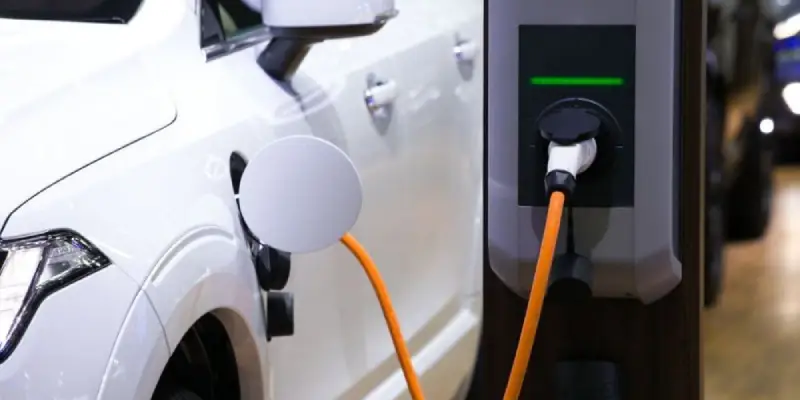
With petrol costing Rs. 338+, people are looking at EVs:
Electric Bikes
Jolta, Vlektra, etc.
These are becoming common. A full charge costs Rs. 80-120 vs. Rs. 300+ for petrol to go the same distance.
Savings
Huge, especially for daily commuters and delivery riders.
Problems
Initial cost is high (Rs. 150,000-250,000), and charging infrastructure isn’t everywhere yet.
Electric Cars
Available
MG ZS EV, Kia EV6, BYD models Cost: Rs. 8 million to Rs. 15 million
Pros
No fuel costs, smooth driving, environment-friendly
Cons
Crazy expensive upfront, limited charging stations, battery replacement costs unknown
For most Pakistanis, the high Petrol Price in Pakistan isn’t enough reason to buy a multi-million rupee car. But for bikes? Makes more sense.
How Pakistan’s Fuel Prices Compare Globally
Let’s see how the Petrol Price in Pakistan stacks up:
| Country | Petrol Price (Rs./Litre equivalent) |
|---|---|
| India | Rs. 358.00 |
| Bangladesh | Rs. 325.00 |
| UAE | Rs. 275.00 |
| USA | Rs. 365.00 |
| Iran | Rs. 65.00 |
| Saudi Arabia | Rs. 125.00 |
What this tells us
- We’re paying more than Bangladesh
- Less than India and USA
- Way more than Iran and Saudi Arabia (they produce oil)
- UAE has cheaper petrol even though they don’t subsidize it
Pakistan falls in the middle. Not the worst, not the best.
Impact on Small Businesses
Every increase in the Petrol Price in Pakistan hits small businesses hard:
Street Vendors
Fruit sellers, vegetable vendors they all travel to wholesale markets. Higher fuel = higher costs = higher prices for you.
Delivery Services
Small courier companies, food delivery startups their entire business model depends on fuel costs.
Mobile Services
Mobile mechanics, electricians, plumbers who come to your house all factor fuel into their charges. Many can’t raise prices too much because customers will stop calling. So they either earn less or work fewer hours.
What Happens to Farming
Agriculture needs fuel a lot of it:
Tractors: Run on diesel
Water pumps: Use diesel or petrol
Tube wells: Run on diesel
Transport: Getting crops to market needs trucks
When the Petrol Price in Pakistan goes up, farming costs increase. Then food prices go up. It’s a cycle.
A farmer in Punjab told a news channel he now spends Rs. 30,000 more per month on diesel for his water pump. He either has to raise crop prices or make less money.
Historical Petrol Prices in Pakistan (Past 5 Years)
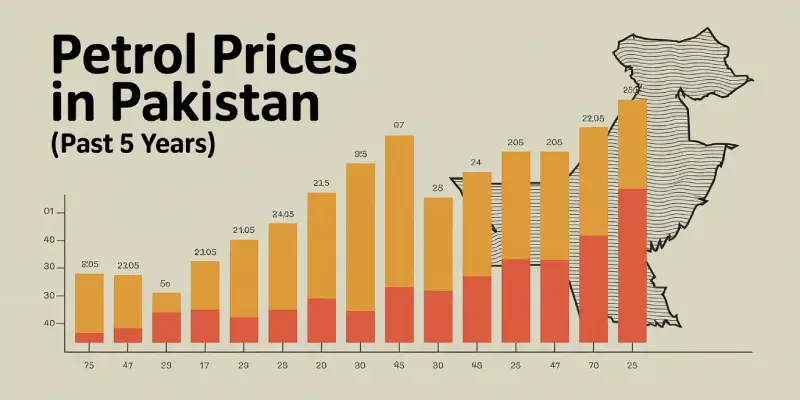
Let’s look at the bigger picture:
| Year | Average Petrol Price (Rs./Litre) |
|---|---|
| 2021 | 108.00 |
| 2022 | 153.00 |
| 2023 | 267.00 |
| 2024 | 301.00 |
| 2025 | 332.00 |
| 2026 (Jan) | 338.50 |
In just 5 years, the Petrol Price in Pakistan has more than tripled. Your salary didn’t triple though, did it? That’s why it hurts so much.
Government Policies and Relief Measures
The government sometimes tries to help:
Seasonal Subsidies
During Ramadan, Eid, or before elections, they might freeze prices or give small relief.
Targeted Support
Sometimes they announce special rates for rickshaws, motorcycles, or public transport.
The Problem
These reliefs are temporary. They’re funded by either taking on debt or are political moves that get reversed later.
Long-term control of the Petrol Price in Pakistan needs bigger economic changes—better currency value, more local oil production, or renewable energy.
How Public Transport Helps
If more people used public transport, the impact of high Petrol Price in Pakistan would hurt less:
Lahore Metro
Cost: Rs. 40-50 for most trips Vs. driving: Would cost Rs. 200-300 in fuel
Savings: Rs. 3,000-5,000 monthly if you use it daily
Karachi BRT
Orange Line, Green Line similar savings for people who use them.
Problem
These systems don’t cover the whole city. If you live far from a metro station, you still need a vehicle.
What You Can Do Right Now
Can’t change government policy, but you can:
- Track prices: Check every 15 days when they update
- Budget better: If you know it’s going up, plan your spending
- Share rides: Seriously, carpooling cuts costs in half
- Maintain your vehicle: A well kept car/bike uses less fuel
- Consider alternatives: Bikes for short distances, metro for daily commute
The Petrol Price in Pakistan isn’t going back to Rs. 100 anytime soon. Adapt your lifestyle to deal with it.
Conclusion
The Petrol Price in Pakistan is one of those things we complain about but can’t control. It’s tied to global markets, currency values, and government decisions.
What you can control is how you respond. Drive smarter. Use public transport more. Carpool when possible. Budget better.
And stay informed. Check prices every two weeks. Follow news about currency and oil markets. The more you understand why prices change, the better you can plan.
Whether you’re a student, worker, business owner, or retiree fuel prices touch everyone’s life in Pakistan. Understanding the Petrol Price in Pakistan helps you make better decisions about your money and your daily routine.
Keep this guide bookmarked. Update yourself regularly. And remember you’re not alone in dealing with this. Millions of Pakistanis are figuring it out together.
FAQs
What’s the current petrol price in Pakistan?
Rs. 338.50 per litre as of January 15, 2026.
Who decides the Petrol Price in Pakistan?
OGRA suggests it, Ministry of Finance finalizes it basically government decides.
How often does it change?
Every 15 days, twice a month.
Why does the Petrol Price in Pakistan keep going up?
Global oil prices, weak rupee, and government taxes all push it higher.
Can I do anything to save money on fuel?
Yes drive smoothly, maintain your vehicle, use public transport, and carpool when possible.
Will electric vehicles solve this problem?
Eventually yes, but they’re too expensive for most people right now.
Why is petrol cheaper in some countries?
Countries like Iran and Saudi Arabia produce their own oil and subsidize prices heavily.
Does the government profit from high fuel prices?
They collect significant tax revenue from petroleum levy and GST on fuel sales.
How much of the price is actually tax?
Roughly 40-50% of what you pay includes various taxes and levies.
What’s the best way to stay updated on prices?
Check OGRA’s website, follow news apps, or bookmark guides like this that update regularly with the latest Petrol Price in Pakistan.