

My grandfather used to tell me stories about August 1947. He was 18 years old, standing on a train platform watching families torn apart, seeing chaos everywhere, wondering if this new country called Pakistan would even survive its first year.
“We had nothing,” he’d say. “No money. No offices. No system. Just hope and one man holding it all together.”
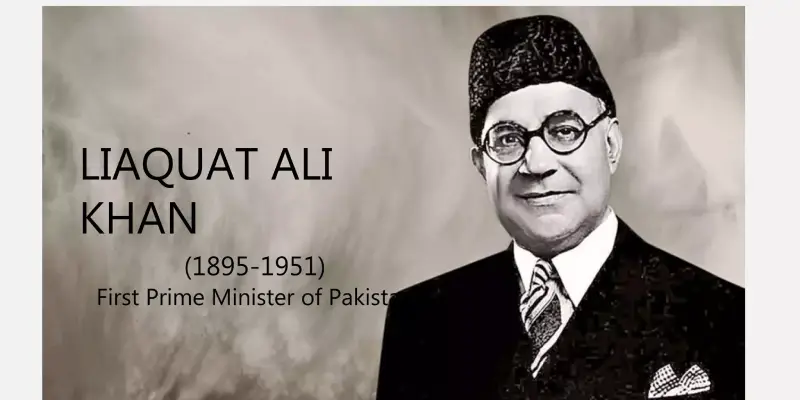
That man was Liaquat Ali Khan, the first Prime Minister of Pakistan.
If you’ve ever wondered who was the first Prime Minister of Pakistan, the simple answer is Liaquat Ali Khan. But his story isn’t simple at all. It’s a story of leadership during impossible times, of trust earned through years of struggle, and of a life cut short just when Pakistan needed him most.
Let me take you through the journey of the man who turned Jinnah’s vision into reality.
The Man Before The Title: Early Life of Pakistan’s First Leader
Understanding who was the first Prime Minister of Pakistan starts with knowing where he came from. Pakistan has produced many influential personalities of Pakistan, each leaving a lasting impact on society, but Liaquat Ali Khan’s journey began long before Pakistan existed.
Liaquat Ali Khan was born on October 1, 1895, in Karnal (now in Haryana, India). His family wasn’t ordinary they were educated, wealthy, and well connected. His father, Nawabzada Rustam Ali Khan, was a prominent figure in the region.
Young Liaquat had opportunities most people could only dream of. He studied at Aligarh Muslim University, one of the finest institutions in British India.
But he didn’t stop there. He went to Oxford University in England to study law, then trained at Inner Temple in London to become a barrister.
Think about it this was the 1920s. Traveling to England for education was rare. He could have stayed in Britain, practiced law, lived comfortably in London. Many did.
But he chose to return to India. Why? Because he saw what was happening to Muslims under British rule. He saw the discrimination, the lack of representation, the fear about what would happen when the British eventually left.
In 1923, he joined the All India Muslim League. This is where his real story begins.
The Partnership That Changed History
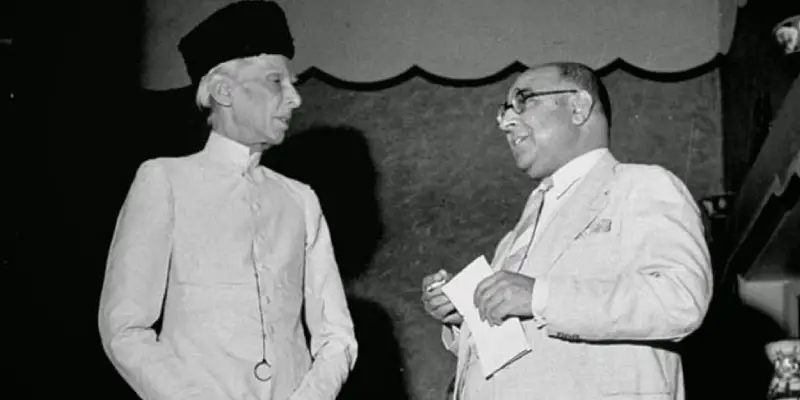
When people ask who was the first Prime Minister of Pakistan, they’re really asking about the relationship between two men Muhammad Ali Jinnah and Liaquat Ali Khan.
They met through the Muslim League. Jinnah was already the leader, the face of the movement. But he needed someone he could trust completely someone who understood law, politics, economics, and who could work tirelessly without seeking personal glory.
He found that person in Liaquat Ali Khan.
From the 1930s onward, they were inseparable in political work. When Jinnah spoke at rallies, Liaquat organized the logistics. When Jinnah negotiated with British officials, Liaquat prepared the briefings.
When Jinnah needed someone to travel across India meeting Muslim communities, Liaquat went.
My grandfather said people called them “Quaid and his shadow.” Where Jinnah’s presence was powerful, Liaquat’s work was practical. Where Jinnah inspired, Liaquat executed.
In 1940, when the Lahore Resolution was passed demanding a separate Muslim state, Liaquat Ali Khan was right there. In 1946, when Direct Action Day led to terrible violence, he was there managing the political fallout. During the Cabinet Mission Plan discussions, he represented Muslim interests alongside Jinnah.
So when August 14, 1947 came, and Pakistan finally became independent, the question of who was the first Prime Minister of Pakistan wasn’t really a question at all.
Jinnah became Governor General. Liaquat Ali Khan became Prime Minister. It was the only choice that made sense.
August 15, 1947: The Day Everything Changed
Imagine waking up one morning and being told: “Here’s a country. Build it. You have no government, no money, no army structure, no officials. Oh, and millions of refugees are arriving who need food, shelter, and safety. Good luck.”
That’s what happened when understanding who was the first Prime Minister of Pakistan really means understanding what he faced.
Pakistan didn’t inherit a working government. The British left, taking most resources with them. India kept most of the government machinery, treasury reserves, and military equipment. Pakistan got leftovers.
Here’s what Liaquat Ali Khan inherited
No proper capital city: Karachi was chosen hastily because Lahore was too close to the border.
No currency: They were still using Indian rupees initially.
No central bank: Essential for running an economy.
No military headquarters: Officers were scattered, many still in India.
No civil service structure: Most experienced bureaucrats were Hindus who went to India.
10-12 million refugees: The largest migration in human history was happening at Pakistan’s doorstep. People arriving traumatized, hungry, homeless.
And on top of all this
Kashmir crisis, India Pakistan tensions, fears of more violence, and uncertainty about whether Pakistan would even survive.
Most people would have collapsed under this pressure. But when you ask who was the first Prime Minister of Pakistan, you’re asking about someone who somehow held it together.
Building A Nation From Scratch: His First Critical Moves
Let me tell you what Liaquat Ali Khan did in those first crucial months. These weren’t just political decisions they were the foundation of everything Pakistan became. Understanding who was the first Prime Minister of Pakistan means understanding these nation building moves.
Forming Pakistan’s First Cabinet
Within days of independence, he assembled Pakistan’s first cabinet. When people ask who was the first Prime Minister of Pakistan, they should also know he chose capable people over political favorites. The cabinet included:
- Sardar Abdur Rab Nishtar (Communications)
- Ghulam Muhammad (Finance)
- Raja Ghazanfar Ali (Food and Agriculture)
- Fazlur Rahman (Commerce)
Each person chosen for their competence, not connections. My grandfather remembered this being talked about in his village that the new government had capable people, not just politicians’ relatives.
Creating the State Bank of Pakistan
On July 1, 1948, less than a year after independence, the State Bank of Pakistan was established. This wasn’t just a formality this was creating an institution to manage currency, control inflation, handle international trade, and give Pakistan financial independence.
Without this, Pakistan would have remained economically dependent on India. Liaquat Ali Khan understood this. The State Bank became one of his most important legacies.
The Objectives Resolution: Defining Pakistan’s Identity
On March 12, 1949, Liaquat Ali Khan presented the Objectives Resolution in Pakistan’s Constituent Assembly. This document was crucial because it answered a fundamental question: What kind of country is Pakistan?
The resolution declared:
- Sovereignty belongs to Allah alone
- Authority to be exercised through elected representatives
- Democracy, freedom, equality, and social justice as per Islam
- Protection for minorities
- An independent judiciary
This wasn’t just words on paper. This became part of Pakistan’s Constitution later. It defined Pakistan as an Islamic democratic state a concept that was new and challenging.
Some criticized it for being too Islamic. Others said it wasn’t Islamic enough. But it gave Pakistan an ideological foundation when the country desperately needed one.
Managing the Refugee Crisis
The human cost of Partition was staggering. 10-12 million people crossed borders. Around 1-2 million died in communal violence. Families were torn apart. Women were abducted. Children were orphaned.
Liaquat Ali Khan’s government had to:
- Set up refugee camps
- Distribute food and water
- Provide medical care
- Help people find lost family members
- Resettle people in new areas
- Maintain law and order during chaos
My grandfather was one of those refugees. He arrived in Lahore from Amritsar with nothing but the clothes he wore. He said the government camps saved his life. “Liaquat Ali Khan’s people gave us food, a tent, and hope,” he told me. “That’s why I always respected him.”
This is what answering who was the first Prime Minister of Pakistan really means understanding the human impact of his leadership during crisis.
The Kashmir Conflict: His Toughest Challenge
In October 1947, just two months after independence, the Kashmir crisis exploded. The Maharaja of Kashmir, a Hindu ruler of a Muslim majority state, acceded to India. Pakistan believed this was unjust and wrong.
Tribal fighters from Pakistan’s northwest entered Kashmir. India sent troops. Suddenly, two newborn countries were in armed conflict.
Liaquat Ali Khan had to make impossible decisions:
- Support the Kashmir cause without starting full war
- Manage Pakistan’s tiny, under equipped military
- Handle international pressure
- Keep the public informed and united
He took Pakistan’s case to the United Nations. On January 1, 1948, India officially complained to the UN Security Council. Pakistan responded through its representative, arguing for the right of Kashmiri people to self determination.
The UN eventually called for a ceasefire and plebiscite. The ceasefire happened. The plebiscite never did.
Kashmir remained divided. It remains divided today, 77 years later. But Liaquat Ali Khan’s handling of this crisis avoiding full-scale war while defending Pakistan’s position showed his careful balance between principle and pragmatism.
The American Visit: A Decision That Shaped Decades
In 1950, something significant happened that people still debate today when discussing who was the first Prime Minister of Pakistan and his foreign policy legacy.
Both the United States and Soviet Union invited Liaquat Ali Khan to visit. This was during the Cold War choosing sides meant something. The man who was the first Prime Minister of Pakistan had to make a choice that would define Pakistan’s international relationships for decades.
He chose America.
In May 1950, he became the first Pakistani Prime Minister to visit the United States. He addressed Congress, met President Harry Truman, and discussed economic and military cooperation.
Why did this matter?
This visit set Pakistan’s foreign policy direction for decades:
- Pakistan aligned with the Western bloc
- Received American military aid
- Joined anti communist alliances like SEATO and CENTO later
- Became America’s ally in the region
Critics say
This created dependency on America. When American interests changed, Pakistan suffered. We became caught in other people’s wars.
Supporters say
In 1950, Pakistan desperately needed allies, money, and military support. The Soviet Union was supporting India. America offered Pakistan a lifeline when it needed one.
My grandfather’s view was simple: “He did what he thought was best for Pakistan’s survival. Maybe he was right. Maybe not. But he had to choose, and he chose.”
Understanding who was the first Prime Minister of Pakistan means understanding he made tough decisions without knowing how they’d play out decades later.
The Man Behind The Politics
Here’s something important about who was the first Prime Minister of Pakistan that many don’t know Liaquat Ali Khan lived simply.
He didn’t build palaces. He didn’t accumulate wealth. He didn’t create a political dynasty. He worked long hours, lived modestly, and focused on his job.
His wife, Ra’ana Liaquat Ali Khan, was remarkable too. She was Pakistan’s first First Lady and an active women’s rights advocate. She founded the All Pakistan Women’s Association (APWA) and worked on women’s education and welfare.
People who worked with him remembered his dedication. He’d often work until midnight, reviewing files, meeting people, planning policies. His health suffered. He aged quickly. But he never complained.
This is important because when we ask who was the first Prime Minister of Pakistan, we’re not just asking about politics. We’re asking about character.
October 16, 1951: The Day Pakistan Lost Its First Leader
This is the part of the story that still hurts Pakistan.
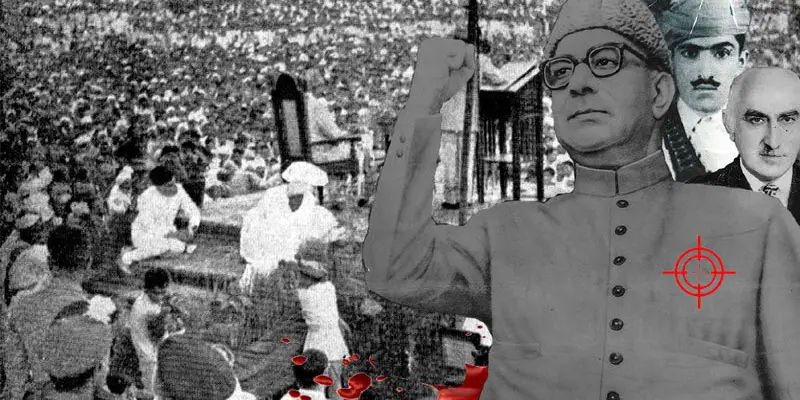
On October 16, 1951, Liaquat Ali Khan went to Company Bagh in Rawalpindi (now called Liaquat Bagh) to address a public gathering. It was supposed to be a routine political event.
At 4:00 PM, while he was speaking from the podium, a man rushed forward and fired two shots at close range. Both bullets hit Liaquat Ali Khan in the chest.
He collapsed. People screamed. Chaos erupted. The shooter was immediately killed by police some say murdered to silence him. Liaquat Ali Khan was rushed to hospital but died within minutes. Pakistan’s first Prime Minister was gone.
He was just 56 years old. He had served as Prime Minister for only 4 years and 2 months.
The Investigation That Went Nowhere
An inquiry commission was formed. They investigated. They questioned witnesses. They wrote reports. But they never conclusively identified who was behind the assassination. The shooter was dead. Motives were speculated but never proven.
Theories included
- Political rivalry within Pakistan
- Indian intelligence involvement
- CIA involvement (some conspiracy theories)
- Personal revenge by someone affected by Partition
We still don’t know the truth. The file remains one of Pakistan’s greatest unsolved mysteries.
My grandfather said the day Liaquat Ali Khan died, people in his neighborhood cried openly. “We felt like we lost our father,” he told me. “We didn’t know what would happen to Pakistan now.”
Why His Death Changed Everything
Understanding who was the first Prime Minister of Pakistan includes understanding what happened after he died. Pakistan never recovered its political stability after 1951. Here’s what followed:
1951-1958: Political chaos. Seven Prime Ministers in seven years. Weak governments. Constant changes.
1958: First military coup. General Ayub Khan took over. Democracy suspended.
1969: Another military takeover by General Yahya Khan.
1971: Pakistan broke apart. East Pakistan became Bangladesh.
1977: Another military coup by General Zia-ul-Haq.
1999: Another coup by General Pervez Musharraf.
Many historians believe if Liaquat Ali Khan had lived longer, Pakistan might have developed stronger democratic institutions. His death created a leadership vacuum that military generals eventually filled.
Of course, we can never know for sure. But the pattern is clear after Pakistan lost its first Prime Minister, it struggled to find stable, democratic leadership again.
His Legacy Lives On
When we ask who was the first Prime Minister of Pakistan today, we’re not just learning history. We’re connecting with values that Pakistan still needs. The legacy of who was the first Prime Minister of Pakistan extends far beyond his four years in office.
What Liaquat Ali Khan Left Behind
The State Bank of Pakistan
Still functioning as the backbone of Pakistan’s economy, a lasting achievement of who was the first Prime Minister of Pakistan.
The Objectives Resolution
Still part of Pakistan’s Constitution, defining its Islamic democratic character. Pakistan’s early leadership helped shape not only its politics but also Pakistan’s cultural heritage.
Foreign policy foundations
Pakistan’s international relationships still reflect decisions made in those early years.
A model of honest leadership
In a country where corruption became common, his simple lifestyle reminds us that leaders don’t need to be corrupt.
The idea that Pakistan can survive anything
If Pakistan survived 1947-1951, it can survive anything.
Liaquat Bagh in Rawalpindi the place where he died has become a symbol. Tragically, it’s where Benazir Bhutto was also assassinated in 2007. The same ground has witnessed Pakistan’s political tragedies twice.
Many historical landmarks in Pakistan reflect the nation’s journey after independence, and Liaquat Bagh stands as a powerful reminder of sacrifice.
But it also reminds us of sacrifice. Of leaders who gave their lives for this country. Over time, several national monuments of Pakistan have come to symbolize unity and progress, preserving the memory of those who built this nation.
What We Can Learn Today
Pakistan in 2026 faces different challenges than 1947. But the lessons from understanding who was the first Prime Minister of Pakistan remain relevant. Every Pakistani should know who was the first Prime Minister of Pakistan and what his example teaches us today.
Leadership requires sacrifice
Liaquat Ali Khan worked himself to exhaustion for Pakistan. When we study who was the first Prime Minister of Pakistan, we see dedication that today’s leaders could learn from.
Honesty matters
He could have enriched himself but chose integrity. Today’s corruption could be fought with leaders like him.
Tough decisions are necessary
He made controversial choices but always for Pakistan’s survival. Today’s leaders often avoid hard decisions for popularity.
Unity is essential
He brought together different provinces, ethnicities, and groups. Today’s Pakistan needs that unity again.
Democracy is fragile
After his death, democracy collapsed repeatedly. We must protect democratic institutions better.
My grandfather passed away five years ago. But before he died, he told me: “Remember Liaquat Ali Khan. Not because he was perfect no human is perfect. Remember him because he showed what leadership should look like. He showed that serving your country is higher than serving yourself.”
Final Thoughts
So, who was the first Prime Minister of Pakistan? He was Liaquat Ali Khan a lawyer who became a nation builder, Jinnah’s trusted companion who turned vision into reality, and a leader who gave his life for Pakistan.
He inherited chaos and created a functioning state with institutions that still serve us today. His honest leadership and personal sacrifice set a standard that challenges every Pakistani leader who came after him.
His assassination in 1951 remains a wound in Pakistan’s history. We lost him too soon, and Pakistan lost its direction after his death. The stability he built collapsed within years, leading to decades of political instability and military rule.
But his example survives reminding us that leadership should be about service, not personal gain.
In a Pakistan that often feels lost, remembering Prime Ministers of Pakistan reminds us of what we once were and what we could be again.
His legacy isn’t just the institutions he built, but the standard he set for honest, dedicated leadership. That’s who was the first Prime Minister of Pakistan. That’s who we need to remember. And that’s who we need to learn from as Pakistan moves forward.
FAQs
Q1: Who was the first Prime Minister of Pakistan?
Liaquat Ali Khan served from August 15, 1947, until his assassination on October 16, 1951.
Q2: What was Liaquat Ali Khan’s educational background?
He studied at Aligarh Muslim University and Oxford University, becoming a qualified barrister from Inner Temple, London.
Q3: What major institutions did the first Prime Minister of Pakistan establish?
He established the State Bank of Pakistan on July 1, 1948, and formed Pakistan’s first functional cabinet.
Q4: What is the Objectives Resolution?
Passed on March 12, 1949, it defined Pakistan as an Islamic democratic state and became part of the Constitution.
Q5: Why did the first Prime Minister of Pakistan visit the United States?
He chose America over Soviet Union in 1950 to secure Western economic and military support for Pakistan.
Q6: How did Liaquat Ali Khan die?
He was assassinated on October 16, 1951, at Company Bagh (now Liaquat Bagh) in Rawalpindi by an unidentified shooter.
Q7: Was his assassin ever identified?
No, the true identity and motive remain one of Pakistan’s greatest unsolved mysteries.
Q8: What was his relationship with Quaid-e-Azam?
He was Jinnah’s most trusted lieutenant and natural choice for Prime Minister due to their 20+ year partnership.
Q9: How long did the first Prime Minister of Pakistan serve?
He served for 4 years and 2 months, from August 1947 until his death in October 1951.
Q10: What was his greatest achievement?
Holding Pakistan together during its most vulnerable first years while building a functioning government from scratch.
Q11: Did Liaquat Ali Khan have children?
Yes, two sons Ashraf Ali Khan and Akbar Ali Khan who never built a political dynasty.
Q12: What happened to Pakistan after the first Prime Minister of Pakistan died?
Pakistan entered political instability with seven Prime Ministers in seven years, leading to the first military coup in 1958.
Q13: Where is he buried?
He is buried at Mazar-e-Quaid in Karachi, next to Quaid-e-Azam Muhammad Ali Jinnah.
Q14: What was Ra’ana Liaquat Ali Khan’s role?
She was Pakistan’s first First Lady, founded APWA, and worked extensively on women’s education and rights.
Q15: How is the first Prime Minister of Pakistan remembered today?
As the nation builder who established Pakistan’s foundations with honest, dedicated leadership during the most challenging period.